Quick Answer
Before hiring a B2B demand generation agency or buying lead lists, a seed-stage founder selling to enterprise should fund demand generation first and keep a small lead generation motion beside it. The Ehrenberg-Bass Institute puts only 5% of B2B buyers in market each quarter, so most target accounts must know the company before they buy. A four-question test and a no-MQL scorecard decide the split.
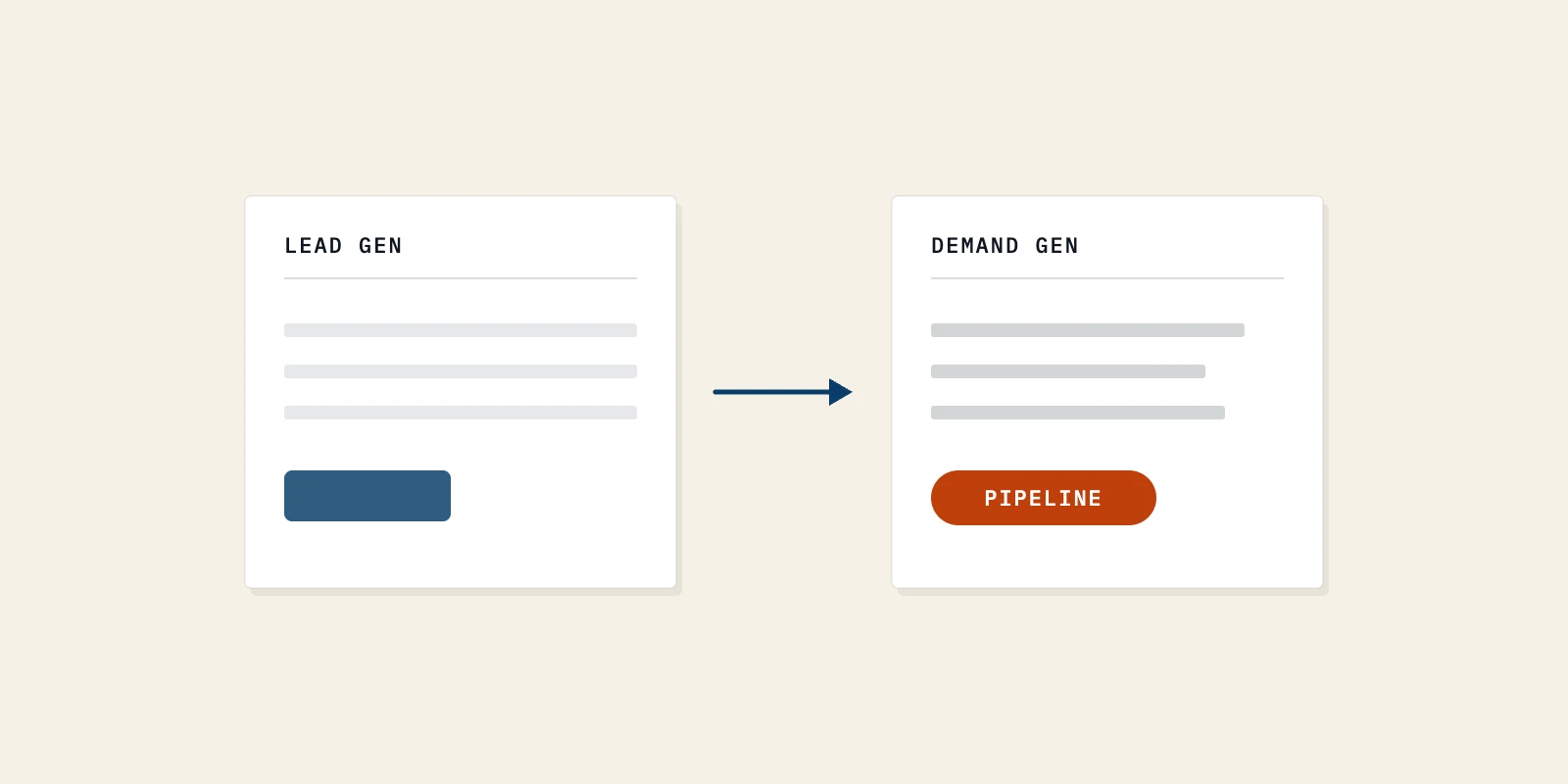
Demand generation is the work of getting the right buyers to know and trust you before they need what you sell. Lead generation is the work of turning people who already need it into named contacts.
I see seed founders mix the two up once investor intros slow down and the board asks where real pipeline will come from.
The mix-up is expensive. A lead list aimed at a market that has never heard of you mostly buys silence.
In this blog I'll cover the real difference, the in-market math, a four-question test for your split, and what to measure before MQLs exist.
Should a Seed-Stage Founder Fund Demand Generation or Lead Generation First?
Fund demand generation first, and run a small, founder-led lead generation motion beside it. At seed, with enterprise buyers, the bottleneck is almost never a shortage of contact details. It is that the buyers who matter have no memory of you.
The buying data backs this up. 6sense's 2024 Buyer Experience Report found that buyers are nearly 70% through their purchase process before they engage a seller. It also found that 81% already have a preferred vendor at the moment of first contact.
That second number is the one I keep coming back to. If four in five buyers have picked a favorite before they talk to anyone, lead generation mostly reaches people who have already decided.
The same report says buyers start first contact more than 80% of the time. So the job at seed is to become the vendor they think of, and then make it easy for them to reach you.
I don't argue for zero lead generation. A founder still needs conversations this quarter, and the board will not wait a year. My default split is to put most founder hours into demand generation and keep a narrow, warm lead generation motion running so pipeline never goes fully dark.
When I searched this question on Google on 22 September 2026, the top results were guides from Salesforce, Cognism and ZoomInfo. All three sell tools that sit on the lead side of the funnel, and each one has a section on using the two together. That is fair advice, but it does not tell a seed founder which one to fund first.
What Is the Difference Between Demand Generation and Lead Generation?
The difference between demand generation and lead generation is the job each one does in the purchase funnel. Demand generation creates the preference; lead generation collects the contact once the preference exists.
People who search "demand gen vs lead gen" often want to know if these are two names for one thing. Is demand generation the same as lead generation? No.
They share channels, but they measure different outcomes on different timelines. Anyone asking what is demand generation usually gets a dictionary answer, and I find the job each one does far more useful.
Here is how I separate them for a seed-stage company:
| Dimension | Demand generation | Lead generation |
|---|---|---|
| Job | Build brand awareness and preference before a need exists | Capture buyers who already have the need |
| Who it reaches | The whole target account list, in market or not | The small share of accounts in market now |
| Output | Recognition, replies, direct visits, "I've been following you" on calls | Names, booked meetings, demo requests |
| Time to show results | One to three quarters | Days to weeks |
| Main cost at seed | Founder hours and consistency | Tools, data, and outbound time |
| How it fails | Publishing to nobody in particular | Contacting people who have never heard of you |
The table shows why the order matters. Lead generation converts demand that already exists. If none exists for your company yet, there is very little for it to convert.
Pro tip: I write the "Who it reaches" row for my own company before any planning meeting. If the lead generation column says "almost nobody this quarter", the budget conversation gets much shorter.
How Many of Your Target Accounts Are Buying This Quarter (the Demand Generation Math)
For most enterprise categories, about 5 of every 100 target accounts are in market in a given quarter. That single number explains why demand generation has to carry most of the weight at seed.
The figure comes from the Ehrenberg-Bass Institute's research for the LinkedIn B2B Institute. Companies change providers of services like software, banking or legal advice roughly every five years. That puts about 20% of buyers in market in a year and about 5% in a quarter.
Professor John Dawes wrote that part of the study, and he put it plainly. "The cycle happens over quite a number of years."
The LinkedIn B2B Institute calls this the 95-5 rule, because 95% of your potential buyers are not ready to buy today.
Now apply it to a seed-stage account list. An enterprise startup's total addressable market is often counted in named accounts, not millions of users. Say your list holds a few hundred companies.
| Target accounts on your list | In market this quarter (about 5%) | In market this year (about 20%) | Not in market this year |
|---|---|---|---|
| 50 | about 2 or 3 | about 10 | about 40 |
| 100 | about 5 | about 20 | about 80 |
| 300 | about 15 | about 60 | about 240 |
| 1,000 | about 50 | about 200 | about 800 |
These are averages, not a forecast for your category. Switching cycles differ by category, and a new category may have no incumbent to switch from at all. I still use the math as a floor on expectations, because it is a sound published starting point for B2B demand generation planning.
This math changes three things about how I plan demand generation and lead generation.
1. Lead Generation Can Only Ever Reach the Five
Say you sell security software to 100 US healthcare systems. In a normal quarter, roughly five of them are actively evaluating a vendor like you.
Lead generation, however clever, works on those five. A bigger contact list for the same 100 accounts does not create a sixth buyer. It only adds more people inside accounts that are not buying.
2. The Other Ninety-Five Decide Who They Call Before They Call
The 95 accounts outside the market still matter most over a two-year horizon. When one of them enters the market next year, 6sense's buyer research suggests it will probably arrive with a favorite already picked.
Demand generation is how you become that favorite. Every post, newsletter issue and research piece is a deposit with accounts that will be in market later.
3. Your Pipeline Target Has a Ceiling You Can Calculate
Say your board expects ten new enterprise opportunities a quarter from a 100-account list. The math says that target sits above the whole in-market pool. I would rather show that to a board early than miss it quietly.
The fix is one of three moves. Widen the account list, lengthen the time horizon, or raise the share of in-market accounts that already know you. Only demand generation does the third.
A Four-Question Test for Splitting Demand Generation and Lead Generation at Seed
I use four yes-or-no checks to decide how to split founder hours between demand generation and lead generation. Two of them point toward demand generation on a "yes", and two point toward lead generation on a "yes".
The test takes about an hour, and every answer comes from data you can pull today. I built it because the usual advice depends on metrics a seed company does not have yet.
When I asked Perplexity this question on 22 September 2026, it suggested judging the split by your MQL-to-opportunity rate. That is a fine rule for a company with a funnel. A seed-stage founder with 30 enterprise conversations has no reliable rate to read.
Here is how I read the answers. A demand-side signal is a "no" to question 1 or 3, or a "yes" to question 2 or 4. Count them, then use the split in this table.
| Demand-side signals | My default split of founder marketing hours | What that looks like each week |
|---|---|---|
| 4 of 4 | 80% demand generation, 20% lead generation | Publish and distribute most days; warm outbound to accounts that engage |
| 3 of 4 | 70% demand generation, 30% lead generation | Same, plus a short weekly outbound block to named accounts |
| 2 of 4 | 50/50 | Content and outbound run as one motion aimed at the same list |
| 0 or 1 of 4 | 30% demand generation, 70% lead generation | Capture existing demand first; keep one steady demand channel alive |
These splits are my working defaults, not a published benchmark. Adjust them after two quarters of real signals.
A seed-stage founder selling to enterprise, with a short account list and a quiet network, scores at least three almost by definition. That is why my answer to the title question is usually demand generation first.
1. Buyers Already Search for the Category by Name
Type your category into Google and a keyword tool. If people already search for it in volume, demand exists, and lead generation has something to capture. That is a capture-side "yes".
If your category barely registers, buyers do not yet know to look for you. That is a demand-side signal, because you have to teach the problem before anyone searches for the answer.
For scale, when I checked Ubersuggest on 22 September 2026, the query "demand generation vs lead generation" alone drew about 480 US searches a month. Check your own category term the same way. A term with a handful of searches a month tells you buyers do not look for it yet.
2. Your Account List Is Under 500 Companies
A short, named list is a demand-side "yes". With 200 target accounts, the in-market math gives you about 10 live buyers a quarter. Lead generation runs out of room fast.
A list in the thousands changes the picture. At that size, there are enough in-market accounts each quarter to justify a real outbound machine.
3. The Founder Has a Network That Still Answers
If old colleagues and investors still take your calls, you have a warm lead generation channel that costs almost nothing. That is a capture-side "yes", and I would keep working it.
If that network has run dry, which is usually why founders ask this question, the answer is "no". You now need strangers to know you, and that is demand generation work.
4. The Sales Cycle Runs Longer Than One Quarter
Enterprise deals with long cycles and a large buying center are a demand-side "yes". A buying center with several people means you need recognition across several roles, not one reply from one contact.
Short cycles with a single decision maker lean the other way. There, a well-timed conversation can close inside the quarter.
Pro tip: I re-run the four questions every quarter. The answers move as the account list grows and as the category starts to get searched, and the split should move with them.
Demand Generation Examples a Seed-Stage Team Can Run on Founder Hours
Good demand generation examples at seed are cheap in money and expensive in consistency. Each one below puts the founder's knowledge in front of the same named accounts, week after week.
• Founder Posts Written for One Buying Center Role
Pick the one role that feels the problem first, such as the CISO or the VP of Finance. Write for that person on LinkedIn two or three times a week. I explain the approach in more detail in why LinkedIn tactics fail without a strategy.
• A Newsletter Sent Only to People at Target Accounts
A small list of the right people beats a big list of the wrong ones. I would rather have 150 subscribers from 60 target accounts than 5,000 strangers. Here is how to start a newsletter that wins first customers.
• One Opinionated Research Piece per Quarter
Survey your own conversations, count something nobody else has counted, and publish it. Original data gets cited, forwarded and remembered in a way a generic guide does not.
• Answers Published Where Buyers Already Ask
Buyers now ask Google, ChatGPT and Perplexity before they ask a vendor. A clear, specific answer to the questions your buyers type is demand generation that keeps working after you publish it.
• Account-Based Marketing Touches Across the Whole Buying Center
Account-based marketing at seed does not need a platform. It needs a spreadsheet of your accounts, the people in each buying center, and a plan to reach each one with something useful.
This is the work a good B2B demand generation agency should be doing on your behalf. If you run it in-house, the founder's voice still has to lead it.
What Lead Generation Should Look Like When Nobody Knows You Yet
At seed, lead generation should be narrow, warm and pointed at accounts your demand generation already reached. Cold volume is an expensive way to reach the five buyers who are in market.
Gartner reports that 75% of B2B buyers prefer a rep-free sales experience. For a founder, that means the lead generation motion should make it easy for a buyer to raise a hand, not chase them with sequences.
• Warm Outbound to Accounts Already Engaging
Start with people who reacted to a post, replied to the newsletter, or visited the site from a target account. A short, specific note to someone who already knows your name starts from trust instead of suspicion. I explain why reply-rate benchmarks mislead founders in why cold email benchmarks use the wrong unit.
• A Demo Request Path With No Hurdles
Put a plain "talk to the founder" link on every page. Skip the long form and the gated PDF. At seed, every buyer who raises a hand is worth a call.
• Founder Calls Booked From Content Replies
When someone replies to a post with a real question, offer a 20-minute call. These are strong early leads, because the demand generation did the introduction. For how to run those first calls, see founder-led sales starts with 30 calls.
What I would not do at seed is buy a large contact list and run cold sequences at it. It can damage your sending domain's reputation, and it reaches people with no memory of you.
Five Demand Generation Signals to Track Before You Have Any MQLs
You can measure demand generation at seed by tracking five leading signals, all tied to your target account list. None of them needs an attribution tool.
I avoid MQL-to-SQL conversion rate at this stage. With a few dozen leads a quarter, a single deal swings the rate so much that it tells you nothing.
1. Branded Search and Direct Traffic
Google Search Console shows impressions for searches of your company's name, and your analytics tool shows direct visits. Rising branded search is a clear sign that brand awareness is building.
2. Replies From the Right Roles
Count replies, comments and messages from people in your buying center roles at target accounts. I ignore total likes, which I find mostly come from peers and other founders.
3. "How Did You Hear About Us" on Every Call
Ask it on every first call and write the answer down word for word. Self-reported answers catch the podcast mention and the forwarded post that software never sees.
4. Newsletter Subscribers From Named Accounts
Track how many of your target accounts have at least one subscriber. I care more about account coverage than list size.
5. Inbound Conversations That Start Warm
Count first calls where the buyer already knows your point of view. When buyers open with "I've read your stuff", demand generation is doing its job.
| Signal | Where I read it | What a good quarter looks like |
|---|---|---|
| Branded search | Google Search Console | Up, quarter over quarter |
| Replies from buying center roles | LinkedIn, newsletter replies | More target-account names each month |
| "How did you hear about us" | Call notes | Content and referrals named more often |
| Newsletter account coverage | Newsletter tool plus account list | A growing share of accounts covered |
| Warm inbound calls | Calendar and CRM | At least one or two a month by quarter three |
The last column is my own bar for a seed-stage company, not an industry benchmark.
When to Shift Weight From Demand Generation Toward Lead Generation
Shift weight toward lead generation once the five signals have risen for two quarters in a row and warm inbound calls arrive every month. At that point there is demand to capture, and more capture effort pays off.
The shift is gradual. I move about 10% of founder hours at a time and watch the signals for another quarter. Cutting demand generation entirely is a mistake I see often, because the pipeline it built can dry up a few quarters later.
These are the three triggers I watch for.
1. Branded Search Keeps Climbing
When searches for your company's name rise quarter after quarter, more buyers already know you. That is demand generation paying off, and it gives lead generation warm names to work.
2. Buyers Mention Your Content Without Being Asked
I listen for first calls where the buyer quotes a post or a newsletter issue back to me. Once that happens most months, capture effort has something real to convert.
3. Your Category Term Starts Getting Searched
A category term that begins to show search volume means buyers now look for the answer on their own. That is the moment lead generation earns a bigger share.
Pro tip: When you shift, point the new lead generation effort at the accounts that engaged with your demand generation first. In my view, that list is worth more than any purchased one.
When a B2B Demand Generation Agency Is Worth Hiring at Seed
A B2B demand generation agency is worth hiring at seed when the founder has the point of view but not the hours to publish and distribute it every week. It is too early if you cannot yet name your target accounts or explain the problem in one sentence.
There are real options in the US market. When I checked Ubersuggest's SERP data (last updated 31 August 2026), Refine Labs ranked first on Google for "B2B demand generation agency".
Blend and Elevation B2B also ranked in the top five in the same data. I'd judge any of them by the same three things.
• It Starts From Your Account List
A good agency asks for your named accounts and buying center roles in the first week. If the first deliverable is a lead volume target, that is lead generation with a demand generation label.
• It Reports on Signals, Not Only Lead Counts
Ask how they will measure the first two quarters. The answer should name leading signals like branded search, target-account replies and warm inbound calls, not "cost per MQL".
• It Keeps the Founder's Voice Up Front
I think enterprise buyers want to hear from the person who built the product. An agency should make the founder more visible, not replace them with a brand account.
Pricing varies widely by scope and model. I break down what drives it in what a demand generation agency costs you.
Fund Demand Generation First, Then Let Lead Generation Harvest It
For a seed-stage founder selling to enterprise, demand generation builds the pipeline that lead generation later collects. Run the in-market math, score the four questions, and split founder hours to match.
I'd start this week with the account list, because every step depends on it. Track the five signals, not MQLs, and hold any B2B demand generation agency to the same bar. Better Marketing builds founder-led demand generation for early-stage software companies.