

Quick Answer
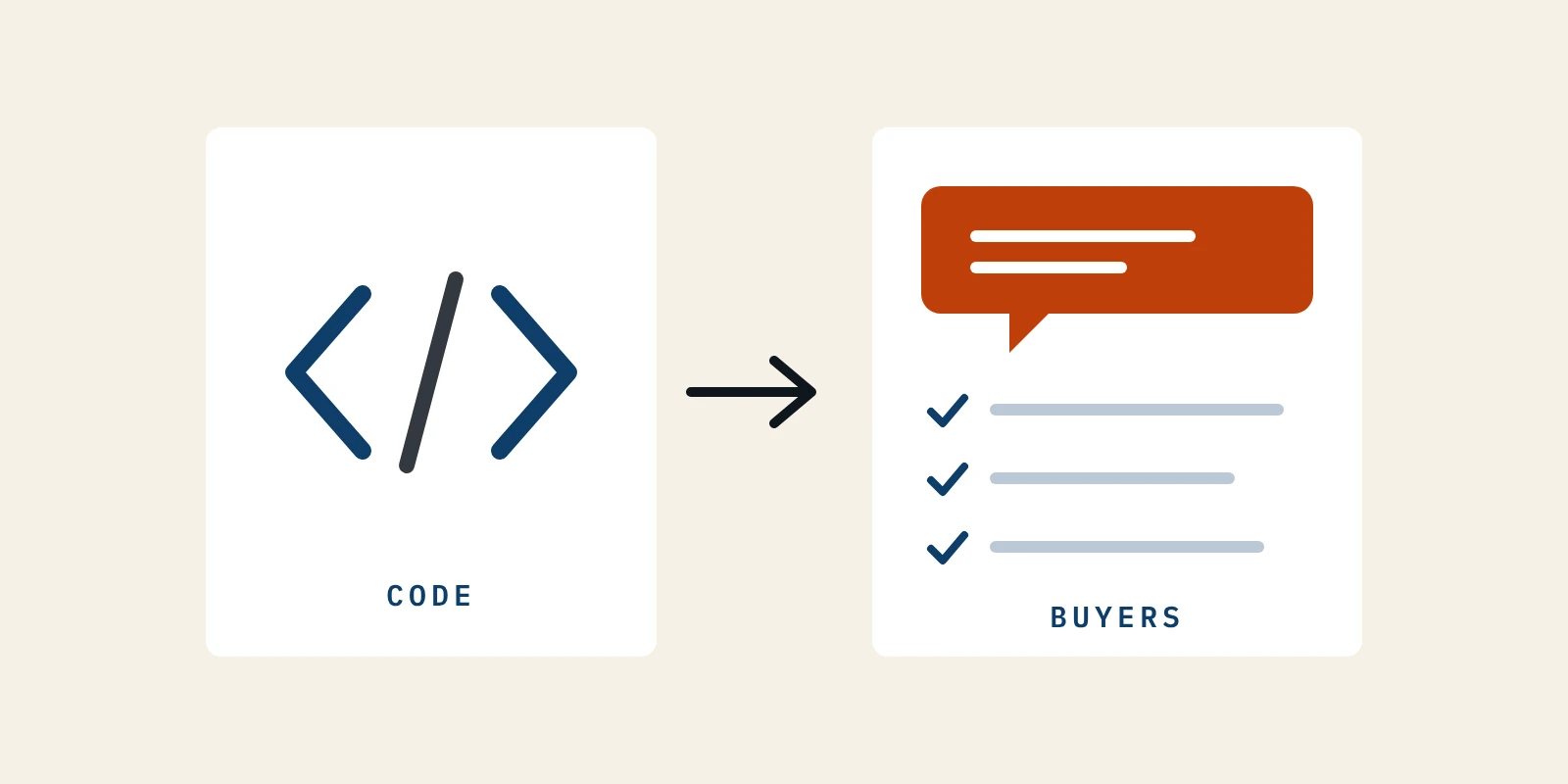
A technical founder can market B2B SaaS by treating it like an engineering system. Write a spec for one buyer, log the exact words buyers use, test messages in small batches and ship to one channel every week. The first ninety days should produce named buyer conversations and a written positioning page, which matter more than followers, traffic or a polished website at this stage.
If you've spent your career writing code, marketing can feel like a field with no spec and no tests. It can feel, I think, like shouting into a room nobody else is in.
Here's how I'd frame how to market B2B SaaS for an engineer. SaaS marketing is the work of getting the right business buyers to understand, trust and pay for software they subscribe to.
Most of it is a loop you already know. You observe, write it down, change one thing and measure.
The hard part isn't the method. It's that the inputs are people, and people don't return stack traces.
In this post I map seven engineering habits onto marketing work and lay out a ninety-day plan. I also cover what not to automate yet, and when to hand the work to someone else.
How to Market B2B SaaS When Your Background Is Engineering
Market B2B SaaS as an engineer by picking one buyer, writing down their problem in their words, and running one channel on a weekly cycle. Skip the brand work and the ten-channel plan until something repeats.
That's the whole of early SaaS marketing for a technical founder, and everything else is detail on top of it.
I'd describe the first job as reducing uncertainty, not getting attention. You're trying to learn which buyer feels the problem most, which words make them reply, and where they already spend time.
Paul Graham's essay Do Things That Don't Scale names the most common early task bluntly. Founders have to "recruit users manually," one conversation at a time, before any system takes over.
For a founder who has only written code, that sounds like sales, and partly it is. The marketing part is what you write down along the way, because that becomes your positioning, your website copy and your posts.
| Engineering Habit | Marketing Version | First Artifact |
|---|---|---|
| Writing a spec | Defining one buyer | A one-page buyer spec |
| Bug tracker | Buyer language log | A shared doc of exact phrases |
| Interface contract | Positioning | A positioning page |
| Changelog | Public build notes | One post a week |
| Unit tests | Message tests | Two subject lines, ten sends each |
| Documentation | Search content | One page per buyer question |
| Postmortem | Lost-deal review | A note after every lost deal |
The rest of this post walks through each row. None of it needs a marketing degree, but all of it needs a weekly slot in your calendar.
Seven Engineering Habits That Already Map to SaaS Marketing
Seven habits you already use in engineering cover most early SaaS marketing work. Each one below says what the habit becomes, how to start, how to tell it's working, and the mistake I'd avoid.
1. Write a Spec for One Buyer Before Any Message
A buyer spec is a requirements doc for a person. Write the role, the company size, the trigger that makes them look for a fix, and what they use today instead of you.
Keep it to one page and one buyer. If you sell to engineering leads and finance teams, pick the one with the sharper pain for now.
You'll know it's working when two customers read it and say it describes them. The mistake is writing for "mid-market companies," which describes no one you can message on Monday.
2. Keep a Buyer Language Log Like a Bug Tracker
Every call, reply and support ticket contains phrases buyers use for their problem. Log them word for word, with the date and the role of the person who said them.
After a month you'll see repeats. Those repeated phrases are your headlines, your post openers and your search terms, written by the people you're selling to.
The mistake is paraphrasing into your own vocabulary. In my view, engineers tend to describe the solution, while buyers describe the pain, and the pain is what they search for.
3. Treat Positioning Like an Interface Contract
Positioning defines what your product is, who it's for and what it's better than. April Dunford, in her quickstart guide to positioning, starts with competitive alternatives, or "what customers would do if our solution didn't exist."
For a technical product, I'd guess the alternative is often a script, a spreadsheet or an internal tool someone maintains reluctantly. That's your real competitor, and it's usually free.
I'd write a positioning page that names the alternative, the two or three things you do better, and the buyer who cares. You'll know it works when a stranger can explain your product back to you in one sentence.
4. Ship a Public Changelog Your Buyers Can Read
You already write release notes. Rewrite one a week for buyers, on LinkedIn or wherever they spend time, with the problem it solves first and the feature second.
Posting from your own profile works better than a company page for a founder nobody knows yet, in my view, because buyers trust people before logos. If writing every week is the bottleneck, a B2B technology marketing agency can turn your notes into posts in your voice.
You'll know it's working when the same few buyers start replying. The mistake is posting the feature list, which reads like a diff to anyone outside your team.
5. Run Message Tests the Way You Run Unit Tests
Change one thing at a time. Send two versions of an outreach message, ten each, to the same kind of buyer, and keep the one that gets more real replies.
Small numbers won't give you statistical certainty, and I wouldn't pretend they do. They will tell you when a message is clearly dead, which is most of what you need early.
The mistake is changing the subject line, the offer and the audience at once, then not knowing which change mattered. Founder-led selling has its own playbook, and this guide to the first thirty sales calls covers it.
6. Treat Search Content Like Documentation
Good docs answer the question a user has right now. Good search content does the same for a buyer who hasn't found you yet.
Google's SEO Starter Guide tells site owners to think about "the words that a user might search for" to find their content. Your buyer language log already holds those words.
Write one page per real buyer question and link them like a docs site. For developer audiences, the docs themselves often are the marketing, as this look at where developers discover tools explains.
7. Hold a Postmortem on Every Lost Deal
When a deal dies, write a short blameless note. Record what the buyer said, where they went instead, and which part of your message failed.
After five or six notes, patterns show up. You may be reaching the wrong role, or the alternative you're replacing may be cheaper than you thought.
The mistake is skipping the note because the loss stings. In my view, lost deals carry more SaaS marketing signal than wins, because buyers who say no have usually compared you against something real.
Pro tip: Put the buyer language log and the lost-deal notes in the same doc. When a phrase shows up in both, it's usually your next headline.
A Ninety-Day SaaS Marketing Plan for a Founder With No Audience
A ninety-day SaaS marketing plan for a technical founder runs in three blocks of thirty days. Each block ends in something you can show, which keeps the work honest.
- Days 1 to 30. Write the buyer spec, hold twenty buyer conversations and start the language log. The output is a positioning page you'd be comfortable showing a customer.
- Days 31 to 60. Pick one channel where your buyers already are, and ship to it every week. The output is a short list of message tests with reply counts.
- Days 61 to 90. Turn the most repeated buyer questions into search pages and keep the weekly posts going. The output is a channel you can describe in a paragraph.
Twenty conversations in a month is my working target, not a published benchmark. It's enough to see repeats in the language log without stalling product work.
If you've ever searched what is SaaS marketing and found a list of forty tactics, this plan cuts that to the few that teach you something in the first quarter.
For a bootstrapped founder, the budget here is mostly hours. Planning a pre-revenue marketing budget in founder hours covers how to protect those hours each week.
Pro tip: Block the same two hours every week for marketing, the way you'd block on-call. Work that only happens when you feel like it doesn't compound.
What SaaS Marketing Work an Engineer Should Not Automate Yet
Don't automate SaaS marketing work you haven't done by hand yet. Automation scales a process, and early on you don't have a process, only guesses.
Engineers are tempted to build the outbound tool before sending the first fifty emails, or to schedule a month of AI-written posts. Both multiply a message nobody has tested.
I'd keep three things manual until they repeat. Those are outreach to named buyers, replies in threads, and the first draft of your positioning.
B2B SaaS digital marketing tools are useful later, for scheduling, tracking and reporting. Before then, they mostly make a weak message reach more people faster.
The honest limit is time. If you're the only engineer, every hour spent here comes out of the product, so pick the one channel and accept that the others wait.
When a Technical Founder Should Hand SaaS Marketing to Someone Else
Hand SaaS marketing to someone else once one channel produces buyer conversations every week and you can explain why. At that point you're the bottleneck, and help can scale what you've proved.
Before that, outside help tends to run your discovery at your expense. A SaaS marketing strategy someone writes for you without your buyer conversations is a guess with formatting.
The first thing to hand off is usually production, meaning drafting posts, building pages and scheduling. Keep the buyer conversations and the positioning with you longer, because B2B SaaS marketing that loses the founder's insight loses its edge.
This isn't a rule for everyone. Some technical founders genuinely enjoy writing and keep doing it for years, and that's an advantage worth keeping.
Start With One Buyer Spec and One Weekly Channel
How to market B2B SaaS as an engineer comes down to running the loop you already know on people instead of code. SaaS marketing rewards the same patience debugging does. Write the buyer spec this week, start the language log, and pick one channel to ship to every week through the rest of the ninety days.
Related guides in this series:
- Do You Need B2B Marketing Experts Yet, or One Person to Do the Work?
- When Does a Marketing Agency for SaaS Companies Start to Pay Off?
If the weekly posting is what keeps slipping, Better Marketing drafts founder posts from your notes so the channel keeps running.