

Quick Answer
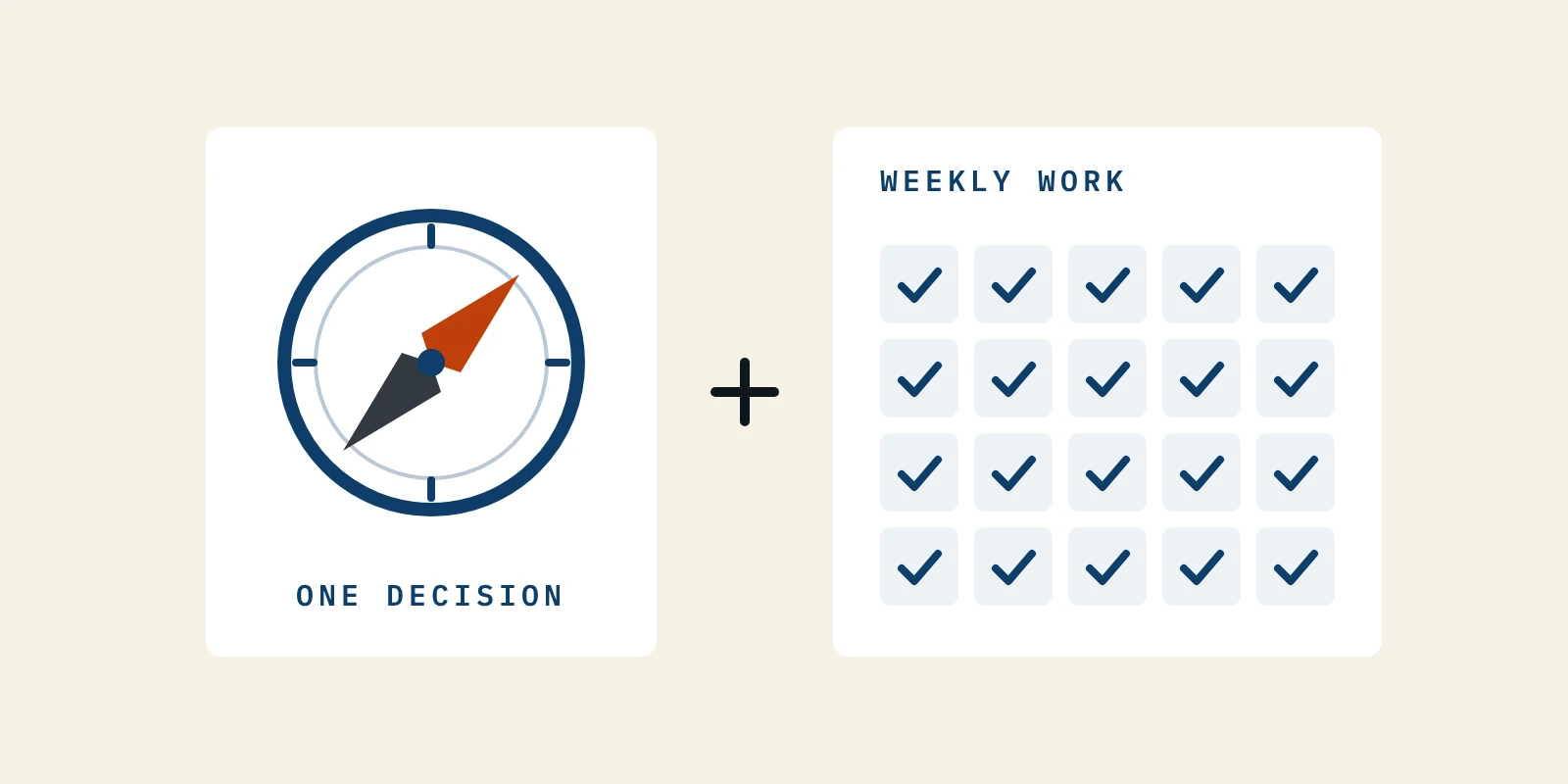
Most seed-stage software companies need one person doing the weekly marketing work before they need B2B marketing experts. Experts earn their fee on rare, costly decisions such as positioning, search setup and analytics design, so they are best bought by the project while the doer runs what they decide. A full-time expert makes sense only when one specialist job, such as search or outbound, fills most of a working week.
When a founder tells me they want marketing handled, the next question is always who to hire. Search for B2B marketing experts and you get lists of people to follow, consultancies and freelance marketplaces.
A B2B marketing expert, as I use the term, is a specialist with proven skill in one part of business-to-business marketing. You hire one to judge and design that work, and someone else runs the weekly tasks. That difference decides most of what follows.
If you came from a large software company, every marketing specialty probably had an owner. At seed stage you can pay for one or two people, and the board still wants to know where pipeline will come from.
In this post I match each marketing job to the person who can do it, then cover cost, vetting and when hiring an expert is a mistake.
Do You Need B2B Marketing Experts or One Person to Do the Work First?
Most seed-stage founders need one person doing the work first, plus a B2B marketing expert for one or two decisions, bought by the project. I'd reverse that order only when a single specialist job, such as search, already fills most of someone's week.
The split I use is simple. Experts are for decisions that are rare and expensive to get wrong. Doers are for work that repeats every week and improves through repetition.
Positioning is the clearest example of the first kind. You set it once, revisit it a few times a year, and every post, page and email depends on it.
A weekly LinkedIn post is the clearest example of the second kind. The hundredth post is better than the tenth, and no amount of expertise skips those ninety posts.
| Question | B2B Marketing Expert | Doer |
|---|---|---|
| What you pay for | Judgment on one hard decision | Output every week |
| Best way to buy | A scoped project or a few hours a month | A part-time or full-time role |
| What you keep | A written decision you can hand on | A running channel and its habits |
| How it fails | A plan nobody runs | Steady output aimed at the wrong buyer |
The second failure is the expensive one. A doer working from a guessed ideal customer profile can post for months without reaching a buyer, and it looks like progress the whole time.
The doer is often a marketing generalist, someone competent across writing, publishing and simple analytics without being deep in any one. That breadth is exactly what a two-person team needs.
If you're not sure there's anything to scale yet, run the five-check threshold test for a first marketer before hiring anyone at all.
Pro tip: Before you talk to anyone, write your open marketing jobs on one page and mark each one D for decision or W for weekly. The ratio tells you who to hire first.
Which Marketing Jobs Need a B2B Marketing Expert and Which Need a Doer?
Positioning, search setup and analytics design need a B2B marketing expert, while founder posting, outreach, content and a newsletter need a doer once the decisions behind them exist. The table below is my working map for the jobs a seed-stage software company usually faces first.
| Marketing Job | Who Does It | When an Expert Pays Off | What to Get in Writing |
|---|---|---|---|
| Positioning and messaging | Expert, then the founder | Before any channel spend | A one-page positioning doc |
| Search and AI answer setup | Expert, then a doer | New site or stalled traffic | A question map and fix list |
| Founder posting | Founder with a doer | Only to set voice and topics | Voice notes and a topic list |
| Outbound sequences | Doer after an expert's first draft | Replies stay near zero | Targeting rules and message copy |
| Content production | Doer with subject knowledge | Very technical subject | A brief template |
| Analytics and attribution | Expert once, then anyone | Before marketing reaches a board report | A tracking plan |
| Newsletter | Doer | List growth stalls | A publishing calendar |
Read the second column first. If most of your open jobs sit in the doer column, hire the doer first and rent the expert for the decisions above them.
1. Positioning and Messaging Belong to an Expert First
Positioning is the decision about which buyer you serve, what you replace for them and why you win. I'd pay a B2B marketing expert for this before anything else, because every later job inherits the answer.
The founder still owns it. A good consultant runs buyer interviews with you, drafts the statement and argues with you about it. At a large company this work usually sits with product marketing, and you may remember how much depended on it.
You'll know it worked when a new hire can read one page and describe the product the way your best customer would. The mistake I see most is buying positioning as a deliverable and never using it.
If your homepage, sales deck and LinkedIn bio still say different things a month later, the work didn't land.
2. Search and AI Answer Setup Needs an Expert, Then a Doer
Search engine optimization has a setup phase and a publishing phase, and they need different people. Setup covers site structure, technical fixes and a map of which buyer questions to answer first.
An expert can do the setup in a short project, then a writer publishes against the map for months. Before you hire a B2B digital marketing consultant or a firm selling B2B digital marketing consulting, ask which person does which half.
You'll know it's working when new pages get indexed, impressions rise for the questions on your map, and AI assistants begin pointing to those pages. The common mistake is paying expert rates for routine publishing.
3. Founder Posting on LinkedIn, X and Reddit Needs a Doer Beside You
Founder posting is weekly work, and it needs your voice more than anyone's expertise. In my view, buyers judge a new product by the people behind it, so the posts should come from your own profile.
The doer here is a ghostwriter or editor who turns a short weekly call into posts, then stays in the comment threads. This is the scoped job a B2B technology marketing agency can run in your voice while you keep the opinions.
Bring in an expert only to set the voice and the first topic list. After that, the skill that matters is consistency, and an expert's rate buys nothing a steady editor can't.
You'll know it's working when the same buyers start commenting and a few mention your posts on sales calls. The mistake is outsourcing the opinions along with the writing.
4. Outbound Sequences Need an Expert-Written First Message
Outbound is mostly doer work. Someone builds target lists, sends messages and follows up, and that work rewards patience more than talent.
The exception is the first message. If replies stay near zero after a few hundred sends, I'd look at the message and the list first. That calls for a short expert job, and a new hire can wait.
Ask the expert to write the targeting rules down, so the doer can rebuild the list without you. The common mistake is hiring a second doer to send more of a message that isn't working.
5. Content Production Needs a Doer With Subject Knowledge
Content production is doer work, but the doer needs to understand your category. Emily Kramer of MKT1 put the general rule plainly in her January 2023 newsletter on agencies and contractors. "In short, hire contractors who are specialists and then let them specialize."
For content, I read that as a writer who already knows your field beats a generalist who writes about anything. For a developer tool, I'd pay more for a writer who can read your docs than for one with a long client list.
You'll know it's working when drafts need edits for tone, not for facts. The mistake is starting content production before positioning exists, because every piece then argues for a slightly different product.
6. Analytics and Attribution Need an Expert Once
I treat tracking as a setup job, because it's cheaper to do right early than to fix later. An expert can define the events, connect your CRM and agree with sales on what counts as a qualified lead.
After that, anyone can read the reports. Your sales pipeline numbers become something you can explain instead of something you reconstruct.
The mistake is skipping this until a board meeting asks where pipeline came from, then rebuilding months of history by hand from inboxes and spreadsheets.
7. A Newsletter Needs a Doer and a Steady Calendar
A newsletter is the clearest doer job on the list. It needs someone who ships on the same day every week or two and answers the replies.
An expert helps only when growth stalls, and even then a few hours of review usually covers it. If the list is small, the cause is often distribution, which leads back to founder posting.
A fractional CMO sits between the expert and the doer, owning several decisions part-time over months. I'd consider one when three or more expert jobs in this table are open at once, and a single project hire would keep coming back.
What a B2B Marketing Expert Costs Next to a Doer, Using Public Pay Data
A full-time B2B marketing expert costs between about 1.1 and 2.6 times what a doer costs in salary alone, based on US government pay data. That gap is why I'd rent expert hours by the project and pay for doer hours by the week.
The pages I read on 10 November 2026, from B2B marketing consulting firms and one freelance marketplace, didn't put prices in their main text. I assume most quote in private, so I used public pay data as a neutral benchmark instead.
| Role in Your Plan | Nearest BLS Occupation | Median Annual Wage, May 2025 |
|---|---|---|
| Strategy consultant (expert) | Management analysts | $101,860 |
| Senior marketing lead (expert) | Marketing managers | $166,790 |
| Research support | Market research analysts | $78,760 |
| Technical content writer (doer) | Technical writers | $90,390 |
| Web publishing (doer) | Web developers | $92,650 |
| Media and PR (doer) | Public relations specialists | $74,750 |
| Design (doer) | Graphic designers | $62,960 |
My method was simple. I took the median annual wage for the nearest occupation in the Bureau of Labor Statistics Occupational Outlook Handbook. I read each page on 10 November 2026, starting with the management analysts page.
The low end of the range compares management analysts with web developers. The high end compares marketing managers with graphic designers.
A specialist doer can cost close to an expert. Technical writers sit at $90,390, about 11 percent below the management analyst median, which is one more reason to pay for subject knowledge in content.
The useful number is hours, not salary. A positioning project takes weeks, while weekly posting never ends, so a full-time expert salary mostly pays for weeks with no hard decision in them.
These proxies are rough. No BLS occupation is called B2B marketing expert, and these medians cover employees across all US employers, excluding the self-employed. They count wages only, so benefits and recruiting come on top.
How to Vet a B2B Marketing Consultant Before You Pay for Advice
Vet a B2B marketing consultant by paying for a small diagnosis of real work before any retainer. A short paid test tells you more than a case study, and it's cheap enough to walk away from. I'd run these four checks in order.
1. Pay for a Diagnosis of One Real Asset
Give the consultant your homepage, your sales deck or your last ten outreach messages, and ask for written findings in a week. Judge one thing. Did they find a problem you hadn't seen yourself?
B2B marketing consultants who are good at this name specific sentences to cut and say why. Weak ones return general advice that would fit any software company.
2. Check They Have Sold to Your Kind of Buyer
Ask about the buyer, deal size and sales cycle of past clients, not the logos. Selling to a security team with a long procurement process is a different job from selling a self-serve tool to individual developers.
A B2B marketing expert who has only worked on low-priced self-serve products may give confident advice that fails in an enterprise deal. The reverse is also true.
3. Watch for Advice That Creates Its Own Follow-On Work
A B2B marketing consultancy that also sells execution has a reason to find more execution work. That doesn't make it dishonest, but it changes how you read the recommendations.
If a B2B marketing consultant agency offers strategy and B2B digital consulting under one retainer, ask a direct question. What would the plan recommend if they couldn't bid on the follow-on work?
4. Agree Who Runs the Plan After Handover
Before you sign, name the person who will run the plan once the expert leaves. If that person doesn't exist yet, the first deliverable should be a job description for that person.
For demand generation specifically, this comparison of a consultant, an agency and a first hire covers the same handover problem by company stage.
Pro tip: Ask every consultant to price the diagnosis and the full engagement separately. Anyone who won't sell the small piece is really selling a retainer.
Following B2B Marketing Experts Trains the Judgment You Need to Hire One
Following B2B marketing experts on LinkedIn is worth doing, because it trains the judgment you need to vet anyone you hire. On one 2026 list of 26 to follow, about a quarter hold senior marketing jobs at software companies and aren't for hire. Many of the rest sell their own consulting, courses or communities.
I'd read them even though they won't do the work, since a founder who can't judge marketing can't spot a weak consultant. Pick three people who write about your motion, enterprise sales or product-led, and read them for a month.
I'd read them for three things in particular.
- How they choose a first channel for a company at your stage
- What they measure in the first ninety days, and what they ignore
- Which of their own mistakes they admit, and what they changed
You'll come out knowing which questions to ask a consultant and which answers sound rehearsed. That alone makes a paid diagnosis far more useful.
The limit is time. Reading isn't a channel, and weeks spent learning a specialty you'll never run are weeks not spent with buyers.
When Hiring a B2B Marketing Expert Is the Wrong Next Step
Hiring a B2B marketing expert is the wrong step when you haven't had real conversations with buyers yet. No expert can position a product for a buyer nobody has met, so the money buys a confident guess.
1. You Have Not Met Your Buyers Yet
If you can't name the role, the trigger and the reason your last three customers bought, do those conversations yourself first. Founder-led selling is slow, but it produces the raw material every expert needs.
2. Nobody Has Time to Run the Plan
An expert's plan with no doer behind it becomes a document in a shared drive. If you can't name who runs it next month, hire the doer first and buy the plan later.
3. The Specialty Was Chosen Before the Channel
Founders sometimes hire a search expert because search worked at their last company. If your buyers don't search for the problem yet, that expertise has nothing to work on.
If you're weighing an agency instead of a person, choosing a digital marketing agency for startups walks through that decision with its own warning signs.
My doer-first rule has a weak spot too. A founder who came up through product marketing may never need outside positioning help, while a founder with no marketing background may need the expert sooner than I've suggested.
Hire the Doer, Rent the Expert and Keep the Judgment
Most founders who ask me about B2B marketing experts need one doer and two or three short expert projects. List your open marketing jobs, sort them into decisions and weekly work, and buy each the way it's used.
Keep positioning and the final call with you, because nobody you hire will know your buyer better. If founder posting is the weekly job you'd hand over first, that's the work Better Marketing does in the founder's own voice.