

Quick Answer
Marketing for SaaS startups gets skipped when the founder would rather keep coding, often because building feels safe and outreach feels like rejection. The fix is a fixed weekly split, with marketing booked in half-day blocks before the coding week fills up. Add a written rule for when code must wait, such as a week with too few buyer conversations or a feature nobody asked for.
A former SaaS founder put it bluntly in a public thread this year. Their last product died because building felt safe and marketing felt like rejection.
I see the same pattern in a lot of technical founders, and I don't think it's a skills problem. Most could learn cold email in a weekend, but every hour in the editor feels productive and every unanswered message feels personal.
Marketing for SaaS startups at this stage is mostly conversations with people who might say no. That's exactly the work a builder will postpone, one more feature at a time.
In this post I cover why the work gets pushed back, a weekly split of building and marketing hours by stage, and a rule for when code must wait. I also cover what a founder who codes can hand off.
Why Marketing for SaaS Startups Gets Pushed Behind the Code
Marketing for SaaS startups gets pushed behind the code because code gives instant feedback and marketing gives silence or rejection. A passing test feels like progress, while ten unanswered emails feel like failure.
Paul Graham noticed the same thing in his essay Do Things That Don't Scale. He names a mix of shyness and laziness as one reason founders avoid recruiting users by hand, since writing code at home feels easier than talking to strangers.
His second reason is that the early numbers look too small to matter. Ten users in a week doesn't feel like marketing, so it's easy to call it a distraction from the product.
The result, in my experience, is a product that keeps improving for buyers who never hear about it. The launch keeps moving, and each delay feels responsible at the time.
Naming the pattern helps. Once you see that the urge to fix one more thing is avoidance, you can plan around it instead of fighting it every morning. The split and the rule below do that planning for you, so the decision isn't made at the moment you feel least like doing it.
Pro tip: Write down the last three features you shipped and who asked for each one. If the answer is nobody, the code was a hiding place, not the bottleneck.
A Weekly Split of Building and Marketing Hours by Stage
A weekly split stops SaaS startup marketing from depending on willpower. You decide the hours once, put them on the calendar, and stop renegotiating with yourself every morning.
| Stage | Building Hours | Marketing Hours | What the Marketing Hours Cover |
|---|---|---|---|
| Before launch | 25 | 10 | Buyer interviews and a waitlist |
| First 10 users | 20 | 15 | Outreach, onboarding calls, follow-ups |
| First revenue | 20 | 15 | One channel, case notes, referrals |
| Repeatable channel | 25 | 10 | Running the channel, handing parts off |
The table assumes about 35 focused hours a week, and the numbers are my working split, not a benchmark. Your total may differ, but the share matters more than the exact hours.
Notice that marketing hours rise after launch, not before. The first users need the most founder time, because they're where you learn what to say to everyone else.
B2B SaaS startup marketing usually needs more of this time than a consumer app, in my view. Deals depend on conversations with named people, which can't be automated early.
Before launch, the ten hours go into interviews and a short list of people who want early access. After launch, the extra hours go into onboarding calls, which double as research on what to say next.
Once a channel repeats without you, the marketing hours drop again. That's the stage where handing parts off makes sense, which the last section covers.
The Rule for When Code Must Wait in Startup Marketing
A split only works with a rule that decides close calls. Without one, startup marketing loses every tie, because the next bug always feels more urgent than the next email.
Paul Graham's essay on the maker's schedule and the manager's schedule explains why the blocks need to be large. He says a single meeting can break an afternoon into pieces too small for hard work.
Marketing work splits a coding day the same way, so I'd book it in half-day blocks rather than scattered hours. These are the rules I'd write down:
- Marketing happens in at least two half-day blocks a week, booked before coding time.
- Code waits when this week's buyer conversations are below your target.
- Code waits when a new feature has no named buyer asking for it.
- Code doesn't wait for a bug that stops a paying user from working.
The last rule matters as much as the others. A broken product loses the users your marketing found, so true blockers still come first.
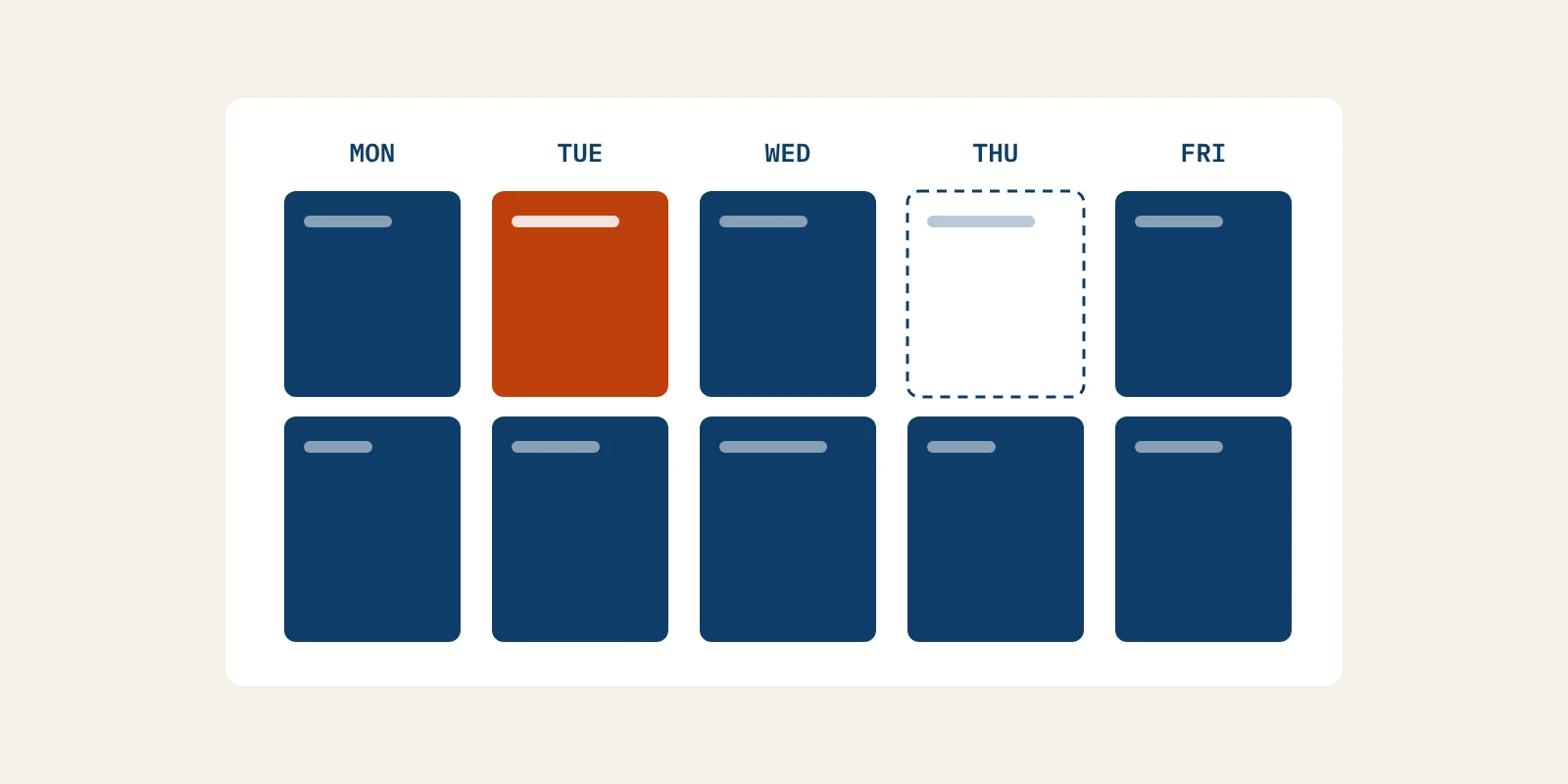
Pro tip: Book the marketing blocks for Tuesday and Thursday mornings, before you open the editor. Once you're deep in code, the email will always seem like it can wait until tomorrow.
How to Make SaaS Startup Marketing Feel Less Like Rejection
SaaS startup marketing feels less like rejection when you stop pitching and start asking. A question about someone's problem is hard to reject, while a request for a demo is easy to ignore.
Rob Fitzpatrick's The Mom Test is built on that idea. It teaches founders how to talk to customers and test an idea, even when people are being polite rather than honest.
Treat early outreach as research, and count attempts rather than wins. If you send twenty questions and get four replies, that's four conversations you didn't have last week.
For a structured version, this founder-led sales guide for technical founders covers where to find the first thirty conversations and what to ask on the call.
The discomfort doesn't vanish, in my experience, but it drops after the first dozen conversations. Most people are kinder than the silence in your inbox suggests.
It also helps to batch the work. Writing ten messages in one sitting feels like a task, while sending one at a time between commits feels like ten small rejections.
Signs the Startup Marketing Split Is Working After Four Weeks
After four weeks, the startup marketing split should show up in your calendar and your inbox before it shows up in revenue. Look for three signs, which are my own checks rather than a benchmark.
- You kept at least seven of the eight booked marketing blocks.
- You held more buyer conversations than in the four weeks before.
- At least one feature on your list now has a named buyer behind it.
If the blocks keep slipping, the split is too ambitious for your week. Cut the marketing hours by a third and protect what's left, because a smaller habit you keep beats a bigger one you skip.
If the blocks hold but conversations don't rise, the problem is the message or the place, not the time. Change who you contact before you add hours.
What a Founder Who Codes Can Hand Off in SaaS Startup Marketing
A founder who codes can hand off the production side of SaaS startup marketing and keep the conversations. Writing drafts, editing, design and scheduling can move to someone else, while buyer calls and positioning stay with you.
In my experience, content marketing for SaaS startups is usually the first thing founders hand off. That works once you know what buyers care about, because a writer can only turn your notes into posts.
Digital marketing for SaaS companies also includes ads, email and search. I'd leave those until the founder-led conversations show what message works, since paying to spread an untested message wastes money.
If posting is the piece you keep skipping, a B2B technology marketing agency can draft in your voice. If you're weighing a full hire, this five-check test for a first marketing hire covers the threshold.
Handing off has a limit, though. A B2B SaaS marketing strategy built without the founder's buyer conversations tends to sound generic, so the hours in the table don't drop to zero.
If time is the constraint, this post on a pre-revenue budget measured in hours shows how to spend the hours you have.
Book Two Marketing Blocks Before You Open the Editor Next Week
Marketing for SaaS startups gets done when it's booked before the code, not squeezed in after. Pick your stage in the table, book two half-day blocks, and write down the rule for when code must wait.
Marketing a SaaS startup as a builder will feel uncomfortable for a few weeks. That's normal, and the calendar keeps you going while the habit forms.
Related guides in this series:
- Do You Need B2B Marketing Experts Yet, or One Person to Do the Work?
- How to Market B2B SaaS When You Have Only Ever Written Code Before
- When Does a Marketing Agency for SaaS Companies Start to Pay Off?
- What SaaS Product Marketing Strategy Looks Like When Nobody Knows You
- Does Social Media Marketing for Tech Companies Work With No Audience?
If the writing keeps losing to the code, Better Marketing turns interviews with you and your calls into founder posts, so the marketing blocks stay short.