
Quick Answer
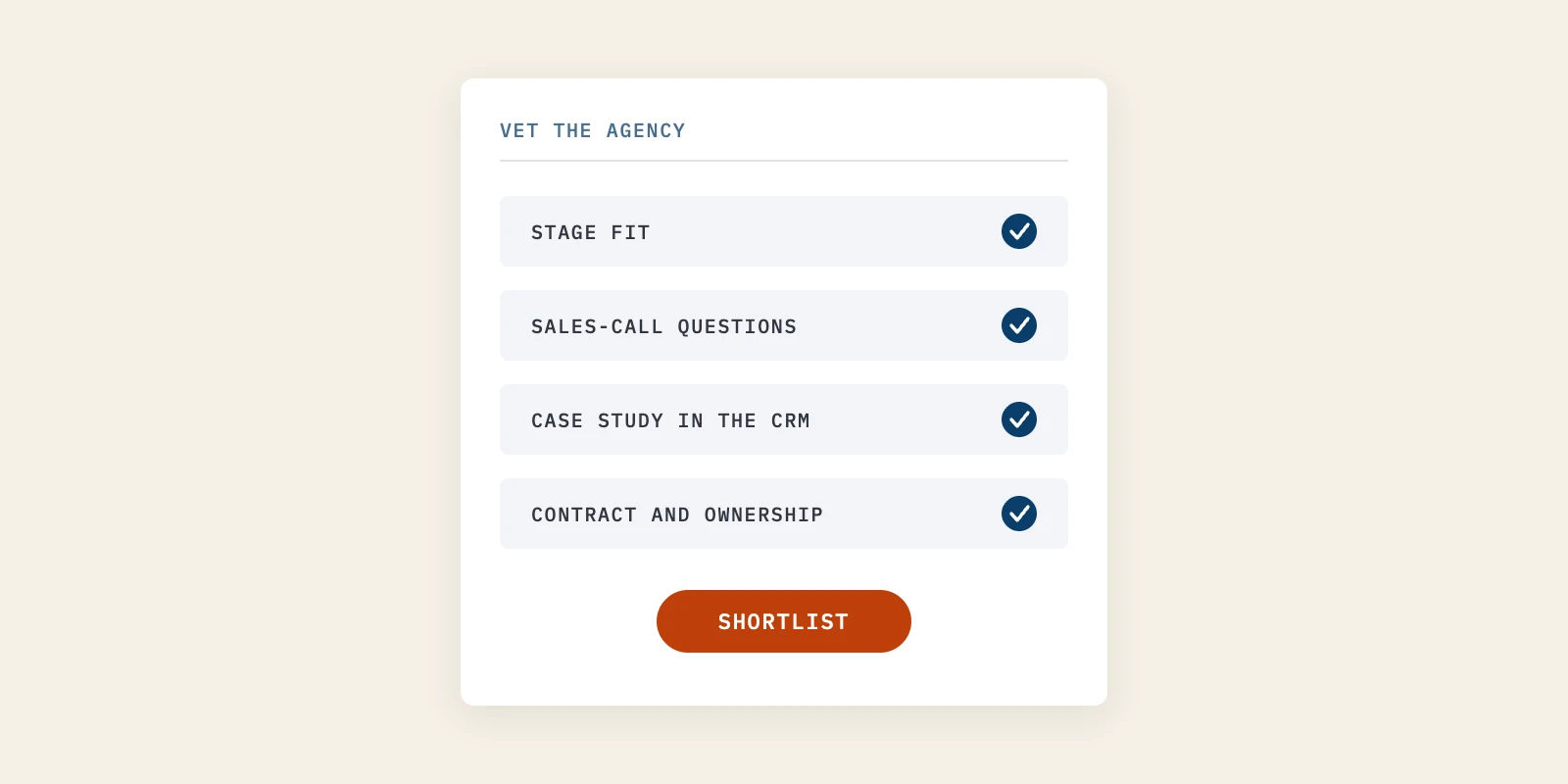
Choosing a SaaS demand generation agency comes down to evidence, not rankings, because most lists of the best B2B demand generation agency options are written by agencies that put themselves first. A founder should match the agency to company stage and ask sales-call questions that expose lead-volume thinking. The founder should then trace one case study back to a real CRM and sign a short pilot that leaves the ad accounts, data and content with the company.
Demand generation is the work of building interest in a product before buyers are ready to talk to sales, then turning that interest into pipeline. When I looked for help choosing an agency to run it on 5 October 2026, every "best agency" list in Google's top nine was published by a company that sells the service or software for it. Each of those lists put its own publisher first or pitched it.
That doesn't make the lists wrong, but it means a founder is grading agencies with the agencies' own answer key. We sell demand generation too, which is why this post has no ranked list.
Below I cover what the agency should deliver, how to spot a lead generation shop, eight sales-call questions, stage fit, case-study checks, contract terms and the founder hours it still needs.
What a SaaS Demand Generation Agency Should Actually Deliver
A SaaS demand generation agency should create interest among buyers who aren't searching yet, then turn that interest into a sales pipeline you can see in your CRM. If the proposal measures success in form fills, you're looking at a different service.
The reason is timing. The LinkedIn B2B Institute's 95-5 rule holds that 95% of your potential buyers aren't ready to buy today. Demand generation exists for that 95%, so the work has to show up months before anyone fills in a form.
The 6sense B2B Buyer Experience Report for 2025 adds the second half. Buyers usually pick a favored vendor before they contact any seller, and that early favorite wins roughly 80% of the time. First contact now happens about 61% of the way through the buying journey.
So I expect three outputs from any agency I'd hire:
Attention from named accounts in your market, not anonymous traffic.
Opportunities that your sales team accepts and logs in the CRM with a next step.
Written lessons about the buyer: which problem, message and proof made the right accounts reply.
Everything else on a monthly report should be a means to one of those three.
How to Tell Demand Generation From a Lead Generation Shop
Many demand generation agencies sell lead generation under a different label, and the difference decides what you're paying for. When Ubersuggest last refreshed the US results for "b2b demand generation agency" on 31 August 2026, a homepage that calls itself a B2B lead generation agency sat in the top ten.
I've written about the split between demand generation and lead generation for seed-stage founders. Here I only need the signals that sort agencies on a sales call.
| Signal | Demand generation agency | Lead generation shop | Paid media shop |
|---|---|---|---|
| What it reports | Opportunities accepted by sales, and the accounts behind them | Meetings booked or leads delivered | Clicks, cost per lead and spend |
| Who it reaches | Accounts that are not in market yet | Contacts on a bought or scraped list | People already searching or scrolling |
| How it is paid | A retainer for a program | Per lead or per meeting | A share of ad spend or a flat fee |
| What you keep after exit | Content, audience and buyer data | A list of people already contacted | Ad accounts, if the contract says so |
None of these models is a scam. The trouble starts when a founder buys one while believing they bought another.
Account-based marketing can sit in either column. It belongs with demand generation when it targets a named list with useful content over months. It belongs with lead generation when it's a cold email sequence with the company names filled in.
Eight Sales-Call Questions That Expose a Weak B2B Demand Generation Agency
The fastest way to judge a demand generation agency is to ask questions only a pipeline-focused team can answer well. Then listen for lead-volume language in the reply. These are the eight I'd ask, with the answers that should reassure you and the ones that should worry you.
1. Ask What They Would Not Do in Month One
Ask: "What would you hold back on in our first month?" A strong team names channels it would delay until it understands your buyer.
A weak team has a full launch plan ready before it has read a single call note. Speed looks good in a proposal, but a plan written before discovery is a plan written for someone else.
2. Ask Which Number They Report Every Week
A good answer is opportunities accepted by sales, plus the accounts and conversations behind them. That number is slow, which is exactly why an honest agency picks it.
Worry when the answer is MQLs, impressions or cost per lead. Those numbers rise easily and say little about sales pipeline.
3. Ask Who Does the Work After You Sign
Ask to meet the person who'll write your campaigns, not only the partner on the call. A strong agency brings that person to the next meeting.
A weak one says "our team" and moves on. When ChatGPT answered a founder's version of this question on 5 October 2026, it listed this as a scorecard item, and it's the one I'd weight most.
4. Ask How Much of the Plan Depends on Ad Spend
Ask what runs if your media budget is zero for the first quarter. A strong answer separates the agency fee from media and shows the work that still happens.
Worry if the fee rises with spend, or if every channel in the plan is paid. That can be the right plan, but you need to know before you budget, not after.
5. Ask for the Customer Problem They Would Lead With
A strong team asks for your won deals and call recordings before it answers. It wants your customers' words, not its own.
A weak team answers instantly with generic pain points that would fit any SaaS company. If the message could belong to your competitor, it will.
6. Ask What Happens If Pipeline Is Flat at Day Ninety
Demand generation takes time, so a flat pipeline at day ninety isn't proof of failure. What matters is the plan for it.
A strong agency names the leading signals it expects by then, such as replies from target accounts, and what it changes if they're missing. A weak one asks you to trust the process with no checkpoint at all.
7. Ask Which Accounts They Would Target First
A strong answer starts from your closed-won deals and builds the first account list from what those buyers have in common. That's account-based thinking even if nobody calls it that.
A weak answer is a contact list bought by job title. You'll reach people, but rarely the ones your product suits.
8. Ask What You Own If You Leave
The right answer is everything: ad accounts in your name, content in your CMS and buyer data in your CRM. The agency works as a user on your systems.
Worry when campaigns run in the agency's accounts or its own tools. Leaving then means starting from nothing.
Pro tip: Send every agency the same one-page brief before the call: customer profile, deal size, sales cycle and current pipeline. A formal request for proposal is overkill at seed stage, and answers you can lay side by side beat a polished deck.
Match the Agency to Your Stage Before Comparing Demand Generation Results
A case study only predicts your results if the client looked like you when the work started. Demand generation agencies build their playbooks around a stage, and the playbook travels badly.
SaaSHero's own comparison of demand generation agencies places Kalungi at $1M to $5M in annual recurring revenue, SaaSHero at $5M to $50M and Refine Labs above $50M. Those are one vendor's labels for its competitors and itself, but the pattern is real. I'd sort my shortlist by stage before I read a single case study.
| Your stage | What you need first | Agency work that fits |
|---|---|---|
| Pre-revenue to first ten customers | Proof the problem is real, and conversations with buyers | Positioning help and founder-fronted content |
| Seed, with repeatable first deals | One channel that brings warm conversations every month | A focused program built around one or two channels |
| Series A and later | Volume across channels and clean attribution | Full-funnel demand generation services with paid media and RevOps |
Most SaaS demand generation, at the seed row, is still the founder's voice with help behind it. That's how we scope our own B2B demand generation agency work: stage first, channel second.
Before any agency proposes a channel, ask it to model customer acquisition cost against your contract value. A channel that can't pay back at your deal size is the wrong channel, however well it's run.
How I Check a Demand Generation Case Study Before I Trust It
I trust a demand generation case study when I can trace one number from the slide back to a CRM and talk to the client who owns it. Four steps get me there.
1. Find the Client's Stage at the Start
Ask what the client's revenue, team size and pipeline looked like on day one. A result earned by a company with a twenty-person sales team says little about yours.
2. Trace One Number Back to the CRM
Pick the headline figure and ask how it was counted. "Pipeline influenced" and "pipeline sourced" are different claims, and only one survives a board meeting.
3. Call the Client Without the Agency on the Line
Ask the reference what the agency got wrong and how it responded. Every honest engagement has a bad month, and a reference who can't name one may not have been close to the work.
4. Check Who Wrote the List That Sent You There
When I asked Perplexity how a seed-stage founder should choose a SaaS demand generation agency on 5 October 2026, nine of its ten sources were lists published by agencies or vendors. The tenth was a directory. Read those lists for names, never for rankings.
Pro tip: Ask for a reference who ended the engagement. How a client talks about leaving tells you more than any testimonial on the website.
Contract Terms That Protect Your Demand Generation Program
Sign a short paid pilot with a clear exit, and make sure everything the demand generation program creates stays in your name. These are the terms I'd ask for:
| Term | What to ask for | Why it matters |
|---|---|---|
| Pilot | About one quarter, with success signals written down before it starts | You judge the work against a plan, not a feeling |
| Accounts and data | Ad accounts, analytics and CRM owned by you, with the agency as a user | Leaving does not erase your history |
| Content | Rights to everything produced for you | Your library keeps working after the contract ends |
| Exit | A short notice period once the pilot ends | A long lock-in rewards the agency for slow results |
| Service-level agreement | Reporting dates and response times in writing | Delays show up as missed dates, not vague apologies |
An agency that resists the ownership terms is telling you how the exit will go. Most good demand generation agencies already work this way and won't blink.
The Founder Hours a Demand Generation Agency Still Needs
No agency removes the founder from demand generation at seed stage. Budget a few hours every week for customer interviews, content approvals and following up on the conversations the program starts.
The agency can write, publish and run campaigns. It can't sit in your sales calls, and buyers at this stage want to hear from the person who built the product.
I've covered what to hand over and what to keep when you outsource demand generation, and the costs beyond the monthly retainer. Read both before you sign, because founder time is the cost most proposals leave out.
Shortlist Three Agencies and Run the Same Test on Each
Pick three candidates by stage, send each the same brief, and ask all eight questions on the call. Then trace one case study back to a CRM and talk to a reference without the agency present.
The right B2B demand generation agency will be comfortable with every step, because pipeline it can prove is what it sells. If you want to hear how Better Marketing answers the same eight questions, bring them to a call with us.