
Quick Answer
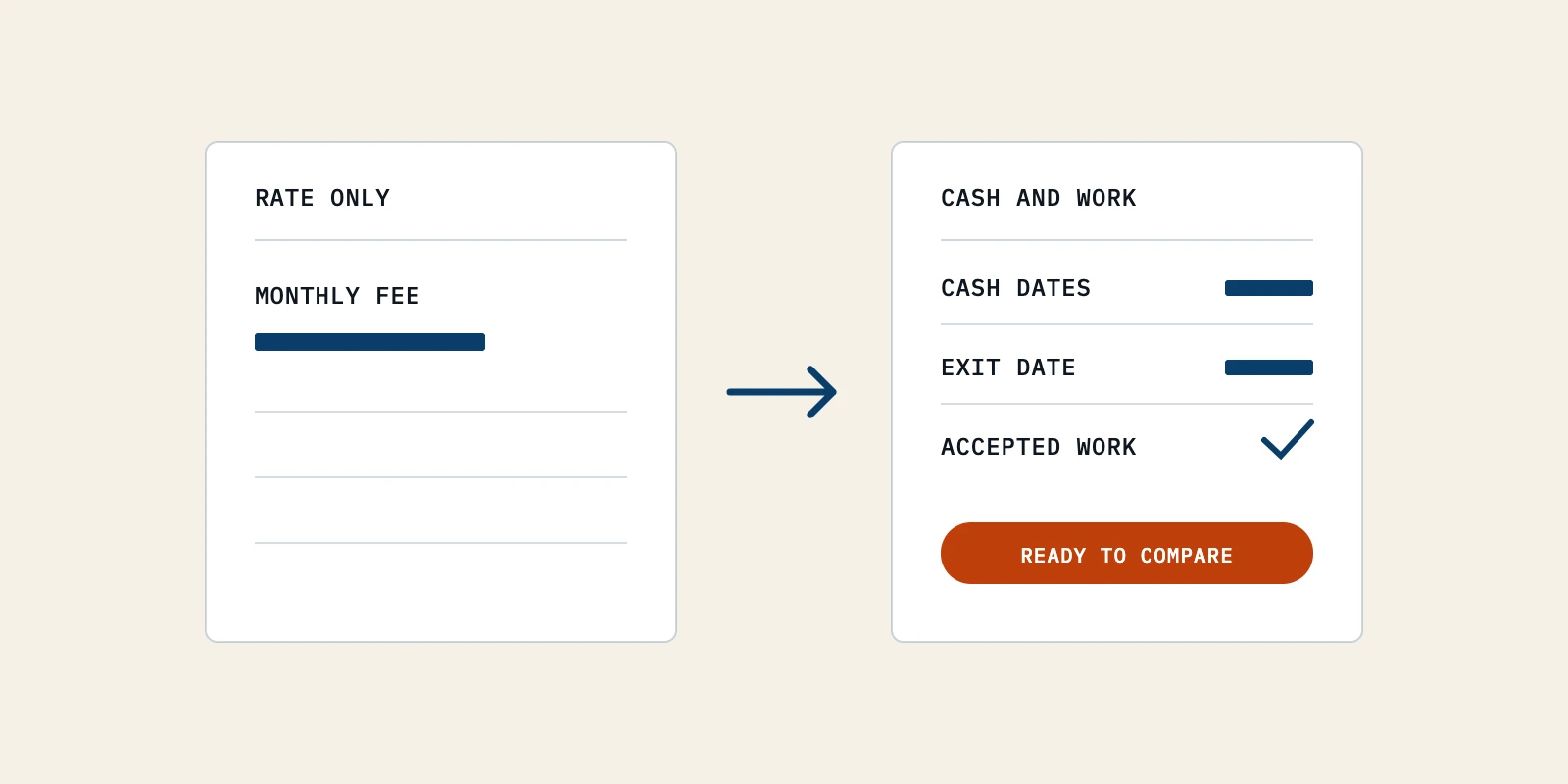
Compare SaaS SEO agency pricing by the total cash you will owe and the work you must approve, with all quotes set to the same dates. Add tool, setup and build fees, and check how the notice period lines up with billing dates. Ask who ships each page and fix, and treat published rates as a guide. If the cost of leaving or the person doing the work is still unclear, hold off on signing.
SEO helps people find your website through unpaid search results. I would compare a SaaS SEO agency quote against the cash your company can commit before your savings run short.
Your first customers came from colleagues, and that source has dried up. An agency proposal now competes with the money you need to keep building. A monthly fee looks simple until the developer, publishing work and cancellation terms sit outside it.
I want a proposal you can approve without guessing who will finish the work. This guide covers SEO agency pricing through a cash ledger, current provider examples and the evidence to request before signing.
Compare SaaS SEO Agency Pricing With a Cash and Delivery Ledger
I compare SaaS SEO agency pricing by putting every proposal on the same cash dates and accepted-delivery basis. The decision depends on what you must pay, what you receive and what remains payable when you stop.
A cheaper retainer does not settle that decision. The agency might supply recommendations while your team writes, codes and publishes. A larger fee might include some of that execution, but the quote needs to say which parts.
I would use a cash-and-delivery ledger rather than assign an agency a score. A high score cannot cancel an invoice or put an unfinished page live. This method makes each uncertainty visible before money leaves the company.
1. Record the Quote Version and Cash Dates
I start with the dated proposal and the governing retainer agreement. Save both with the package name and any written changes. A public pricing page supplies context; it does not establish the terms of your purchase.
For each proposal, I would request the fields in this worksheet. Keep the same review date across providers so the comparison does not quietly give one agency more time or a smaller scope.
| Ledger Field | What to Record From the Quote |
|---|---|
| Agency and package | Exact offer name and proposal date |
| Work period | Start date, delivery dates and review date |
| Cash dates | Each invoice amount and payment deadline |
| Extra spending | Setup, tools, publishing and implementation outside the fee |
| Exit dates | Earliest notice date and effective end date |
| Remaining payments | Invoices, approved extras and fees still payable after notice |
| Delivery receipt | Work URL or file, responsible person and acceptance state |
| Evidence | Clause, quote line or written clarification supporting each entry |
I use cash flow here to mean money entering or leaving the company. A founder's unpaid review time matters, but it is not another agency invoice. Combining the two hides the amount your bank balance must cover.
Mark a missing amount as unresolved in your working ledger. Do not turn silence into a zero. Ask the agency to price the item or state explicitly that the package includes it.
2. Calculate Cash Until the Earliest Exit
I build the SEO retainer checklist around four dates: the initial term, the notice deadline, the effective cancellation date and the invoices due through that date. Ask the agency to mark the matching clause beside each.
Add the setup fee, each invoice through the end date, approved extras and any termination charge, then subtract only a refund or credit the agreement confirms. Count each invoice once, and if the terms are unclear, ask for a dated invoice example.
Rock The Rankings’ pricing page shows Strategy & Consulting at $4,500 a month on its default 90-day option, or $13,500 across three payments. That is arithmetic from an advertised price, not a quote, so ask for the real invoice schedule.
Authority Magnet’s public terms describe month-to-month service, 30 days’ written notice and advance billing. Ask what happens when notice lands just before a billing date, because the signed agreement decides what you owe.
Pro tip: I would ask for a cancellation example tied to the proposal's actual start date. A calendar with invoice IDs exposes overlapping charges that a phrase such as “flexible terms” leaves unresolved.
3. Separate Implementation Cash From Founder Time
I would split a SaaS SEO budget into two columns. One tracks additional cash spending, and one tracks internal capacity. This prevents a strategy-only quote from appearing complete when your product team must execute it.
| Delivery Dependency | Cash Entry | Capacity Entry |
|---|---|---|
| Agency sends technical recommendations | Quoted implementation fee, if external | Named developer and scheduled release slot |
| Agency supplies drafts | Extra editing or publishing quote, if excluded | Product reviewer and CMS owner |
| Agency requests a tool | Subscription amount and payer | Person responsible for access and setup |
| Founder reviews product claims | External review fee only if actually incurred | Review slot and person who can approve claims |
I would not assign a market hourly rate to your unpaid time and present it as cash. You can track an opportunity-cost estimate separately, using your own assumptions, without pretending it is a bill.
The Rock The Rankings strategy tier says the client executes while the agency leads strategy. Its done-for-you offer is a different purchase. Comparing their monthly figures without that distinction would miss a major dependency.
For a savings-funded founder, an unstaffed dependency is a reason to hold the purchase. If nobody can ship the technical fixes, paying for a backlog of recommendations will not make those fixes happen.
I would ask for a narrower deliverable or a separate implementation quote. The agency can revise its offer; your company should not accept an undefined obligation simply to finish the sales process.
4. Define Accepted SEO Deliverables
I translate the statement of work into receipts that can be inspected. “SEO content” is not enough to distinguish a brief, a draft, an approved article and a live page.
For content, ask the agency to specify the intended buyer question, product evidence, delivery format, revision process and responsible publisher. Choose the acceptance point explicitly rather than discovering it on the invoice date.
A page receipt can include its URL, final file, approval record and agreed checks. A technical receipt can include the issue, change evidence and verification result. These are proposed controls, not claims that every agency already supplies them.
| Receipt State | Meaning in the Proposed Ledger | Next Action |
|---|---|---|
| Accepted | Work meets the agreed acceptance conditions | Record the receipt and applicable invoice |
| Revision required | A named condition remains unmet | Identify the correction and deadline |
| Client blocked | A client dependency prevents completion | Name the dependency owner and new date |
| Not delivered | No agreed work product has arrived | Apply the agreement's missed-delivery process |
Outreach activity and a published link are different receipts, so state which one the fee covers and what proof comes with it. Authority Magnet’s terms credit two missing pieces when eight are due and six arrive, but ask any provider for its own shortfall process.
Google Search Console shows queries, impressions and clicks, but it does not replace the delivery receipt. An accepted page also does not prove it caused a sale, so agree separately on how business results get judged.
5. Record Blocked Work and Scope Changes
I would require a written change entry before a new SEO request changes the price or delivery date. Scope creep begins when an extra task becomes an assumed obligation without an agreed adjustment.
A product launch might create a new page request while an older technical fix waits for a release. The ledger should show which task replaces which, who approves the change and what happens to the invoice.
Do not describe that replacement as additional output unless both tasks will arrive. Ask for the revised statement of work and preserve the original, so the agency and your team share the same delivery record.
For client-blocked work, I would request a named dependency and a notification date. Ask if the agency pauses billing, substitutes another task or carries the work forward. None of those treatments follows automatically from a monthly fee.
Authority Magnet's terms explicitly put engineering implementation outside the standard engagement. That means a founder comparing its quote needs a developer plan rather than assuming an audit includes a shipped fix.
I would reject the comparison as incomplete until the agency identifies the treatment of blocked work. You are buying a defined delivery process, not a promise that somebody will resolve every dependency later.
Public SEO Agency Prices Need Their Original Billing Context
I treat published SEO prices as reference points with their original scope and billing unit attached. They help test a proposal, but they do not establish a market average or a final offer for your software company.
• Monthly and Annual Prices Describe Different Offers
I checked these provider pages on October 11, 2026. The table includes real competing US vendors and clearly separates Authority Magnet, which serves US buyers from India.
| Provider and Original Source | Advertised Price or Page Observation | Context Needed for Comparison |
|---|---|---|
| Better Marketing | Search & AI Visibility from $1,499/month as one channel; two channels $2,499/month, three $3,499/month | Agency executes; website build or rebuild quoted separately; term and notice terms sit under “How the six months work” and need confirming in the agreement |
| Rock the Rankings | Strategy & Consulting from $4,500/month; default 90-day option | Client executes; selected term affects pricing |
| Omniscient Digita | Full-service engagements start at $120,000/year | Annual starting figure; invoice schedule and exit rights require a quote |
| SimpleTiger | Custom quote; no dollar rate visible on the inspected page | Price remains unknown, not zero |
| Authority Magnet | Foundation $5,000/month; no setup fee advertised | India-based, serves US buyers; engineering and client subscriptions excluded |
Omniscient’s annual figure does not prove a signed annual term or show when cash is due, so ask for the billing calendar and the governing term. A package name alone does not tell you what the retainer funds.
Better Marketing publishes its price, from $1,499 a month per channel, and names what every plan includes: a campaign lead, strategy, human-written content, execution and a report every two weeks. Ask any agency, us included, for the statement of work.
For related support, I would assess a SaaS SEO agency against the same delivery and cash records. A service label cannot substitute for a written offer.
• A Quote Without a Public Price Needs the Same Evidence
I would shortlist a custom-priced agency only if it will supply enough detail for the ledger. SimpleTiger's inspected pricing page describes packages without a dollar figure; that observation does not tell us the eventual quote.
Ask for the package, billing unit, included output, execution ownership and proposed term. Then compare the offer against the other written proposals. Do not insert a listicle's estimate into the agency's quote column.
I would also save the date and source of any public number used during procurement. A revised page can change a starting price without changing the proposal you already received.
This is where generic SEO agency pricing ranges become less useful. They do not tell you if your product needs implementation outside the package or how much cash remains due when you cancel.
Pro tip: I would save the selected pricing option alongside the dated proposal. A monthly rate displayed under a longer commitment can become misleading when copied without its term.
Approve an SEO Quote Only When the Evidence Is Attached
I would approve an SEO quote only when the proposal, cash calendar and acceptance record agree. Any unresolved delivery cost or cancellation payment keeps the purchase on hold.
• Attach the Proposal and the Governing Terms
I want the scope, rate and exit terms in the actual agreement rather than scattered across a sales call and a pricing page. Attach written clarifications and ask the provider to confirm which document governs.
Authority Magnet's public terms explicitly say the signed agreement controls. They also distinguish ownership of paid client content from the agency's reusable templates and toolkit.
I would request the transferable files by name. A right to keep finished content does not answer if you receive editable briefs, research exports or licensed third-party assets. The agreement needs to resolve those items.
If the proposal still mixes advice and execution, I would use the existing guide to what a SaaS SEO agency does to clarify the work being purchased.
For a narrower advisory offer, I would also review the SaaS SEO consultant option. Then request a concrete scope rather than assuming the smaller engagement solves implementation.
• Ask for Delivery Evidence Before a Longer Commitment
I would make the review inspectable by listing accepted work, remaining dependencies, actual spend and the next proposed tasks. Ask for the published URLs, technical change records and search reporting agreed in the statement of work.
Google Search Console can provide query and click evidence. Keep the report's date range and page filters with the review. A blended sitewide total cannot by itself demonstrate the effect of a particular new page.
I would also ask the agency to name the next constraint. A page still waiting on product approval needs a different action from a live page with weak search discovery.
When the proposed response is simply more content, I would examine the SaaS SEO mistakes guide before adding output to the agreement. The next purchase should address the identified problem.
A defined review is harder than accepting a promise of growth. It requires your founder time and cooperation from the agency. I would prefer that friction before signing to uncertainty after the invoices begin.
Pro tip: I would carry unresolved entries into the next proposal version instead of deleting them. Close each one with a quoted amount, a responsibility or a specific term that both parties can inspect.
Put the SEO Commitment Beside Your Cash Calendar
I would choose a SaaS SEO agency only after comparing cash due, implementation ownership and accepted SEO work on one ledger. Keep the current proposal and the exit calculation beside your company's payment calendar.
Ask the shortlist to resolve missing entries before you sign. Public starting prices help you ask better questions; they cannot decide the purchase for you.
If the work depends on a developer you cannot assign, narrow the scope first. I would bring that written brief to Better Marketing.