Quick Answer
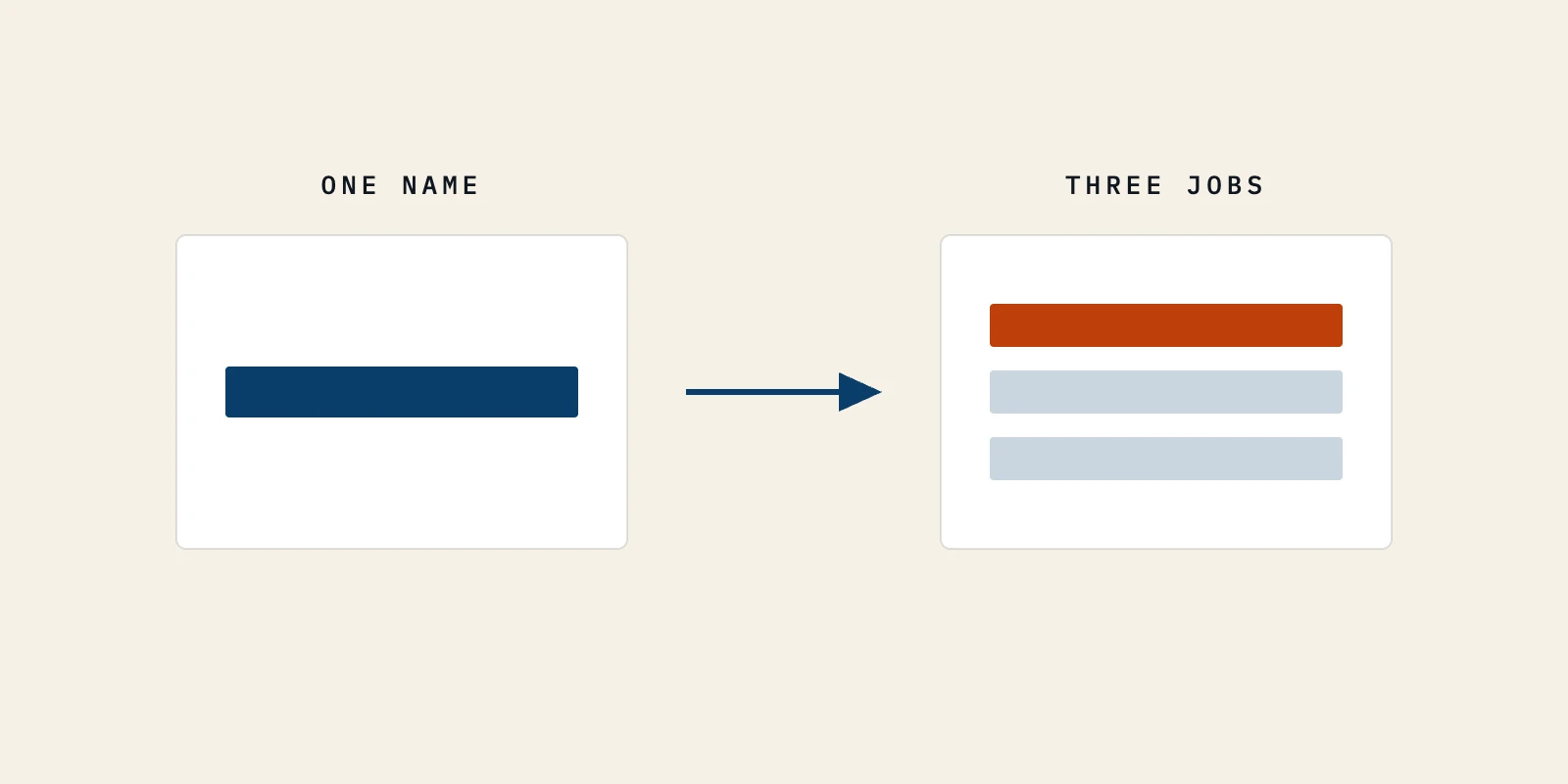
Three different jobs get sold under the name SaaS SEO agency. They are a content engine, technical and platform work, and off-site authority and AI citation work. Each one draws on a different part of a software team, and a seed-stage company can staff only one of them properly. This guide separates the three, prices each in internal hours, and names which to buy first.
I searched Google for SaaS SEO agency on 22 September 2026 and found four service pages, four listicles and a Reddit thread. A SaaS SEO agency is a vendor a software company pays for unpaid search visibility.
That much is agreed everywhere. What that first page does not tell you is that the label covers three jobs which barely resemble each other.
Which one you can actually run is decided by your team, not by the retainer. Only one of the five pages I read that day drew the distinction at all, and it mapped every type back to its own service list.
So the separating work falls to you, before the first call.
In this blog I will split the three jobs apart, price each one in the internal hours it consumes, and say which I would buy first at seed stage.
What a SaaS SEO Agency Actually Sells You
A SaaS SEO agency sells three separable jobs. They are a content engine, technical and platform work, and off-site authority and AI citation work. Most retainers bundle all three and price them as a single line item. You work out later which one the team was really doing.
I treat them as three purchases, because they consume three different resources and they fail in three different ways.
1. A Content Engine That Turns Your Expertise Into Pages
This is content marketing applied to search. The agency researches queries, drafts pages, publishes them and links them together.
The deliverable is a page count and a publishing rhythm. It is the simplest job to buy and to measure, which is also why it is the simplest to fake.
What it needs from you is product truth. Someone who knows the customer has to answer questions and read drafts, every single week, or the pages come out sounding like every other page.
Pro tip: Ask for the first three page titles before you sign. If they could run on a competitor's site with the brand swapped, the agency has not learned your product yet.
2. Technical and Platform Work Inside Your Product
This job is about search engine indexing, which means making sure a web crawler can reach your pages, render them and store them.
For a software as a service product this is not cosmetic. Google's own documentation, last updated on 4 March 2026, describes a three-phase process of crawling, rendering and indexing.
It warns that pages sit in a render queue and "may stay on this queue for a few seconds, but it can take longer than that" (Google Search Central).
The same page is blunt about the consequence. "If the content isn't visible in the rendered HTML, Google won't be able to index it." That is the job, and it is the one almost nobody hands over cleanly.
3. Off-Site Authority and AI Citation Work
This job happens away from your site. It covers the backlink side of SEO for SaaS companies, plus the newer work of getting named inside AI answers, usually called answer engine optimization.
It matters more than it used to. When I ran the query on 22 September 2026, Google's AI Overview for SaaS SEO agency named Skale, TripleDart, Breaking B2B and Scalerrs.
Its citations came from Percepture, Impression Digital, Virayo, Breaking B2B, Discovered Labs, Right Left Agency, TripleDart, Scalerrs and a Reddit thread in r/SaaS. Read that list again because those are largely agencies writing about agencies.
The shortlist a buyer now receives is assembled substantially from vendor-published material, which is why getting cited by AI answers has become a separate line of work.
What Each SaaS SEO Agency Job Costs You in Internal Hours
Every SaaS SEO agency job has a hidden second invoice, paid in your team's time. The retainer is the part you can see.
Here is the split I use when a founder asks me to price an engagement honestly.
| Job | What the agency delivers | What your team must supply | Who supplies it | What failure looks like |
|---|---|---|---|---|
| Content engine | Query research, drafts, published pages, internal links | Product truth, customer language, weekly review time | Founder or a subject-matter expert | Drafts sit unreviewed, publishing slips, pages read generic |
| Technical and platform | Audit, prioritized fix list, specs, retests | Repository access, sprint capacity, a staging environment | Engineers | The fix list is still open at month four |
| Off-site authority and AI citation | Outreach, digital PR, structured data specs, citation tracking | Named spokespeople, customers willing to go on record, naming decisions | Founder and the customer-facing team | Mentions never land, AI answers keep naming competitors |
• The Founder or a Subject-Matter Expert Pays for the Content Engine
Budget two to four hours a week of someone who genuinely knows the buyer. Not a marketing coordinator relaying questions.
When that person is traveling or raising, the engine stalls within two weeks. I would rather buy fewer pages a month and keep the review slot than buy volume and let it queue.
• Your Engineers Pay for the Technical Job
An agency can write the spec. Shipping it costs sprint capacity you have already promised to the product roadmap.
This is the line item founders underestimate. It is also why the question founders actually type, how much should a SaaS spend on SEO, has no answer until they name the job.
• Your Name and Your Customers Pay for the Authority Job
Digital PR needs a person willing to be quoted and customers willing to be named. Neither can be outsourced.
If your enterprise customers are under NDA and your founders will not go on record, this job is not available to you yet, at any price.
Pro tip: Before the call, write down how many hours a week each of those three suppliers can truly commit. Bring that number to the meeting instead of a budget.
Why a SaaS SEO Agency Cannot Ship the Technical Fixes Alone
No SaaS SEO agency can merge code into your repository, so the technical job is the first one to stall. I see three reasons for it, and none of them is agency competence.
1. An Agency Cannot Merge Code Into Your Repository
Every fix in Google's JavaScript guidance is an engineering change. Using the History API instead of URL fragments. Avoiding soft 404s in client-side routed apps.
Injecting a single canonical tag. Fingerprinting asset filenames so cached resources do not go stale (Google Search Central).
Those live in your codebase. An agency writes the ticket and your team writes the code, so the work moves at your sprint speed, not the retainer's.
2. Rendering Fixes Compete Directly With the Product Roadmap
A rendering fix ships no customer-visible feature. In a planning meeting it loses to anything a paying account has asked for, and it loses again next sprint.
Google's guidance makes this worse, not better, because it is undramatic. A page that renders late is not broken. It is queued. Nothing goes red, so nothing gets escalated, and I plan for that silence rather than hoping against it.
3. Nobody Owns a Result That Two Teams Share
When the agency owns the diagnosis and your engineers own the fix, the outcome belongs to neither. Month four arrives with an audit everyone agrees with and nothing deployed.
The fix is unglamorous. Name one engineer, give them a standing slot, and let the SaaS SEO agency book work into it directly.
If you cannot name that person today, do not buy the technical job this quarter. Interrogating the proof an agency shows you is a separate discipline, and worth auditing the case study before you believe it.
How to Tell Which Job a SaaS SEO Agency Is Selling on the First Call
I identify the job in about ten minutes with three questions. None of them is about results, because results are a different conversation.
1. Ask Which of the Three Jobs the Retainer Covers
Say the three jobs back to them. They are content engine, technical and platform, and off-site authority and AI citation. Ask for the percentage split of hours across the three.
A specialist gives you a number. A generalist gives you a philosophy. Neither answer is wrong, but only one of them tells you what you are buying.
2. Ask What They Need From Your Team Every Month
This is the question that separates a B2B SaaS SEO agency that has done this before from one that has not. Any SEO agency for SaaS that has run an engagement past month three knows exactly what it needs.
An experienced team answers immediately and specifically, because they have been burned by the gap. If the answer is that they need very little from you, they are selling you the content engine and calling it everything.
3. Ask Who Ships the Technical Fixes and Into Which Sprint
Push until you get a named role and a cadence. "We will work with your developers" is not an answer.
Pro tip: Ask them to show you the client's own Google Search Console property on a screen share rather than a slide. The export is trivial to edit; the live interface is not.
Which SaaS SEO Agency Job I Would Buy First at Seed Stage
At seed stage I would buy the content engine first, and I would buy it small.
It is the only one of the three whose supplier is guaranteed to exist in a five-person company. That supplier is a founder who knows the buyer.
The other two jobs are constrained by facts you cannot change this quarter. Engineers are already committed to the roadmap, and a referenceable customer base does not exist yet.
That choice also survives contact with the numbers. When I checked Ubersuggest on 22 September 2026, SaaS SEO agency showed 1,000 US searches a month, an SEO difficulty of 31 and a cost per click of $82.94.
At that cost per click, a handful of genuinely useful pages is worth more than a pile of ordinary ones.
The same test decides the SaaS SEO agency vs freelancer question, and the choice between a SaaS SEO consultant and a full SaaS SEO company. A single specialist can carry the content engine.
Nobody can carry the technical job without your engineers. That is the part of SaaS SEO agency work a retainer cannot buy on your behalf.
One honest caveat. If your product is a client-rendered single-page app and Google cannot see your content, the ordering flips. A content engine publishing into an unindexable site is money set on fire.
Check that first, and run the click math on one query before you commit to any of it.
Name the SaaS SEO Agency Job Before You Take the Meeting
Pick one of the three jobs, name the person inside your company who will supply its input, and confirm they have the hours. Then buy that job and only that job.
A bundled SaaS SEO agency retainer is not a bad deal because it costs too much. It is a bad deal because it hides which of the three you are getting until month four. Naming the job early is the most useful thing I know about buying in this market, and it is how we scope engagements at Better Marketing.