

Quick Answer
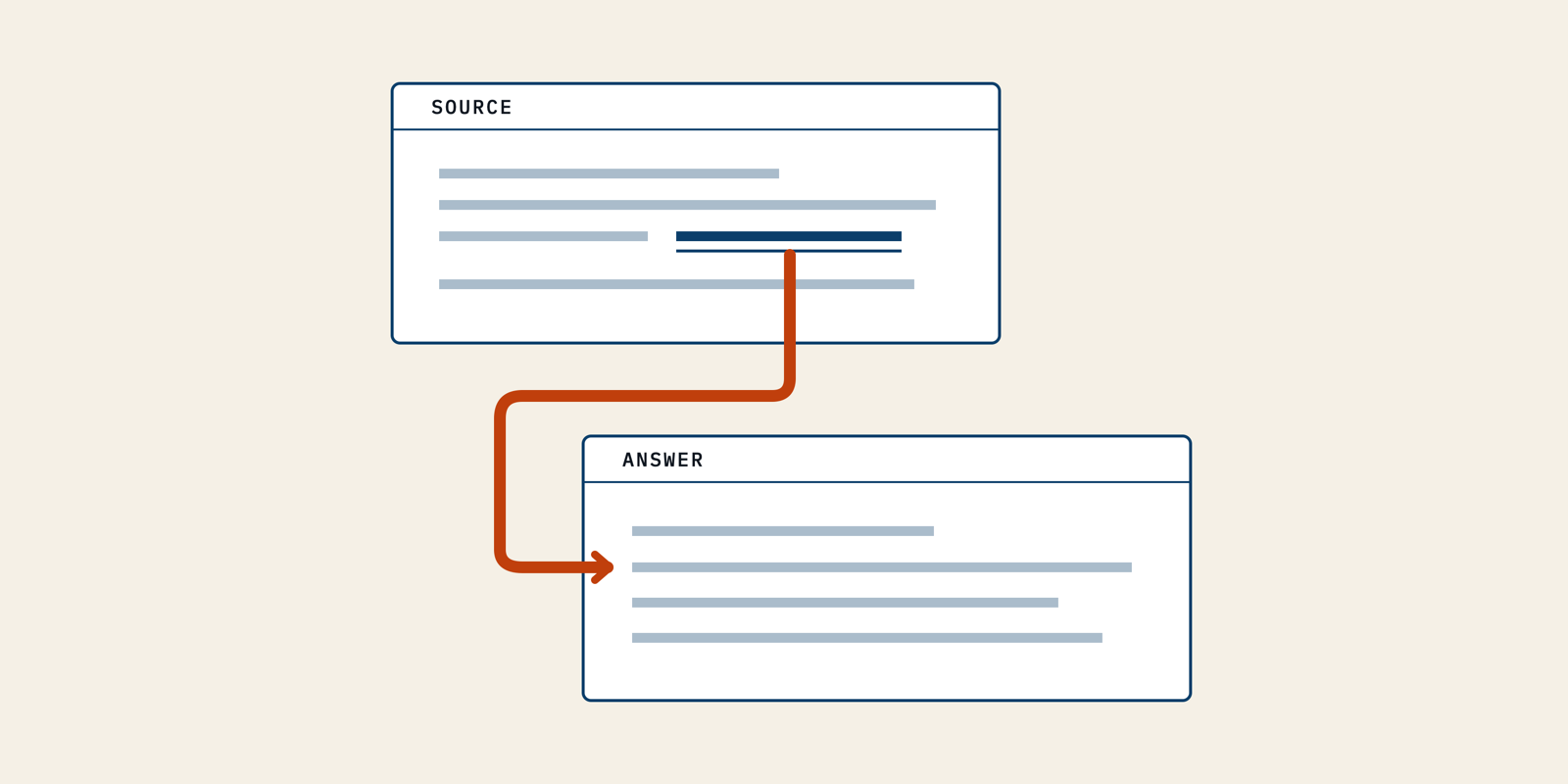
Plan internal links around the next question a reader needs answered. Choose useful destination pages, locate source paragraphs that create that question, and review each proposed anchor in context. Accept the connection, rewrite it, defer it until the answer exists, or reject it. Verify the destination and crawlable connection before release. Track completed edits separately from search performance, and revisit links when product claims or pages change.
An internal link connects pages on the same website. Before hiring a SaaS SEO agency, I would check what each connection promises readers.
A small software site can have useful articles and still leave buyers hunting for the next answer. Publishing another guide does not resolve an unclear path between existing pages.
I would start with the pages already worth reading. In this blog, I'll cover a link acceptance worksheet, examples from published pages, engineering checks, and a practical maintenance process.
How I Choose Internal Links Before Hiring a SaaS SEO Agency
I approve an internal link when its source creates a specific reader question and its destination answers that question. My internal linking strategy starts with that connection, then checks implementation.
I would keep the review in a shared sheet that an editor and engineer can both use. A diagram can show relationships, but the sheet should explain the proposed edit.
1. Choose a Destination With a Useful Answer
I begin by opening the destination and identifying the answer it provides. Its title alone is not enough. A page about a software category may still omit the integration detail a buyer needs.
For each destination, I would record the reader's job, the relevant section, and any limitation. This gives the editor something concrete to match against a source paragraph.
I would prioritize pages that resolve questions close to a product decision or unblock understanding. That is an editorial choice, not a claim that commercial pages deserve every available link.
A technical explanation can be the right destination when the reader is diagnosing a problem. A service page can be useful when the reader is deciding who should do the work.
| Destination condition | My decision before seeking links |
|---|---|
| Answers the promised question and remains accurate | Consider it for a contextual connection |
| Covers the topic but omits the required answer | Request the missing explanation first |
| Describes an obsolete product capability | Ask the product owner to review it |
| Offers a service when the reader needs instructions | Find the instructional answer instead |
I use a topic cluster as a way to organize related material. Membership in the cluster does not, by itself, explain why one specific paragraph should link to another page.
For a real example, our content audit guide explains how to inventory pages and assign decisions. I would consider it when a source raises the question of which existing articles deserve further work.
I would not promise that the same destination explains a particular software integration. The acceptance test concerns the answer on the page, not the topic label attached to it.
2. Find the Source Paragraph That Creates the Question
I open the proposed source and read the whole surrounding section. The useful insertion point is where a reader needs another answer, not every occurrence of the destination's keyword.
For contextual links, I would write the next question beside the source paragraph. If I cannot express that question clearly, I pause the edit instead of adding a vague reference.
Our on-page SEO guide discusses what on-page work can and cannot fix. A paragraph about reviewing weak existing content can create a practical question about how to perform that review.
I would pair that question with the audit guide's inventory and verdict process. The proposed relationship follows the reader's task. It does not depend on both titles containing the same phrase.
I also check the interruption cost. An early link that sends a reader away before the source explains its own argument may be less useful than a later connection.
That is a judgment call I would record. “The reader needs the inventory method at this point” is a better editing instruction than “add more internal links.”
Pro tip: I would save the source paragraph with the proposed sentence. A URL and anchor alone leave the next editor guessing where the connection belongs.
3. Match the Anchor to the Destination
I write anchor text that describes the answer the destination provides. Then I read the full sentence aloud, including the words around the link, to check its promise.
Google's link guidance recommends descriptive, reasonably concise anchor text and meaningful surrounding context. I use that guidance as a quality test, not a reason to force exact-match keywords.
For the audit destination, I would consider “review existing content” in a sentence about deciding what to update. I would reject “prove your SEO return” if the destination does not provide that proof.
An anchor can be accurate in isolation and misleading in its sentence. “Review existing content to guarantee more demos” adds a promise the destination cannot support.
My review would therefore capture both the linked phrase and the surrounding claim. Changing only the clickable words cannot repair an unsupported sentence.
I would also keep the source useful without requiring the click. The link should extend an explanation that already makes sense, rather than hide the answer the source was supposed to give.
4. Assign an Acceptance Decision and an Owner
I would use an internal linking strategy template with explicit decisions. This prevents an unresolved content question from becoming an engineering task that looks ready to ship.
| Verdict | What it means | Required next action |
|---|---|---|
| Accept | The sentence and destination answer agree | Complete technical checks before release |
| Rewrite | The destination fits, but the sentence overpromises | Edit the sentence and review it again |
| Defer | The useful destination answer does not exist yet | Assign the content gap to an owner |
| Reject | The connection does not serve the reader's task | Leave it out and record the reason |
My worksheet would carry these fields:
- Source URL and the exact paragraph being edited.
- The next question that paragraph creates.
- Destination URL and the section that answers it.
- Proposed anchor text and complete sentence.
- Acceptance decision, reason, owner, and review date.
- Technical check result and release date when completed.
I would use separate editorial and technical statuses. A well-written connection can still point to the wrong URL. A working link can still take the reader to an irrelevant answer.
When an answer is missing, I would leave the row deferred with a named content owner. Adding a link to the nearest loosely related page would conceal the actual gap.
If I brought in a SaaS SEO agency, I would hand over this worksheet with the source paragraphs attached. The scope becomes reviewing specific connections, repairing destinations, and verifying completed edits.
I would ask the reviewer to explain rejected connections too. That record helps prevent another editor from proposing the same weak pairing during a later article refresh.
Test an Internal Linking Example Against Published Pages
I test each internal link against the actual source and destination text. This internal linking example makes the decision explicit. The following decisions are proposed editorial exercises using published pages, not changes already made to the website.
The source is our on-page SEO explanation. I would focus on its discussion of improving existing content, then check the content audit process as the destination.
| Proposed connection | Evidence to inspect | My verdict |
|---|---|---|
| “Review existing content” when deciding which pages need work | The audit guide describes inventory and page-level verdicts | Accept after technical QA |
| “Prove the revenue from every SEO change” pointing to that guide | Its audit process does not establish that causal proof | Rewrite the promise |
| A promised product-specific integration walkthrough | Neither of these articles supplies that walkthrough | Defer until a verified answer exists |
| A general sales link inserted into an explanation of content inventory | The insertion interrupts the instructional task | Reject that placement |
I would open the destination beside the proposed sentence during review. “It is somewhere in the guide” is not enough; the reviewer should name the section containing the promised answer.
The distinction matters for a small SaaS team because a deferred link exposes a writing task. An accepted link exposes an implementation task. Those tasks need different owners and different completion evidence.
I would keep the example's wording modest. The worksheet demonstrates how to evaluate a connection; it does not show that the proposed edit increased traffic or produced sales.
For a broader diagnosis before spending on more content, I would also read our SaaS SEO mistakes guide. Its discussion of technical access and buying intent helps frame problems a linking edit cannot solve alone.
Verify Internal Links Before the Edit Goes Live
I ask engineering to verify both the destination and the crawlable connection before marking an internal link complete. An editorial acceptance decision does not establish that the published implementation works.
• The Destination Resolves to Its Canonical URL
I would open the destination from the edited page and inspect the final address. A link that lands on a removed article, a login screen, or an unrelated replacement fails my handoff.
Google recommends linking consistently to the canonical URL when a page has duplicate versions. I would therefore check the preferred address rather than copying an old campaign URL.
| Check | Evidence I would request |
|---|---|
| Destination works | The intended page opens and contains the promised answer |
| Preferred URL is used | The link targets the agreed canonical URL |
| Redirect is unnecessary | The source points directly to the current destination where appropriate |
| Content remains public | The answer is available without an unexpected account requirement |
Pro tip: I would record the final destination after following the link. That catches an old URL which still works only because it redirects somewhere else.
• The Web Crawler Can Discover the Link
I would ask the engineer to check the rendered implementation against Google's crawlable-link guidance. A control that reacts to a human click does not automatically provide a usable crawl path.
A web crawler discovering a URL and a search index retaining its content are separate steps. Google's explanation of Search makes that distinction explicit and does not guarantee indexing.
I would also look for orphan pages, which are published destinations with no inbound internal links. A useful new destination needs an entry path, but I would still apply the reader-question test when choosing its source.
Measure Internal Links Without Claiming Every Ranking Change
I separate evidence that an internal link works from evidence that search or business results changed. My change log should support a cautious interpretation, rather than turn every later movement into an attributed win.
• Record the Change Before Measuring Results
I would save the source, destination, sentence, and release date before comparing performance. I would also record concurrent changes, such as a rewritten title, a new product page, or a technical deployment.
For search reporting, I would compare consistent page and query groups across matching date windows. A shift in the query mix can change average position without showing that the edited connection caused the movement.
Google describes PageRank as part of its link-analysis systems. That does not give me a visible score for the value of an individual internal link.
My reporting would distinguish these questions:
| Question | Evidence I would use | Limit |
|---|---|---|
| Did the edit ship correctly? | Published sentence and destination check | Does not prove discovery or traffic |
| Did readers use the connection? | Relevant click tracking, if configured | Does not prove the answer helped |
| Did search visibility change? | Consistent page/query performance comparison | Other changes may explain the result |
| Did the destination support buyer progress? | Relevant downstream events and qualitative review | A click alone is not a qualified buyer |
I would avoid promising a fixed ranking timeline. Google does not guarantee crawling, indexing, or serving a page. The useful immediate outcome is a verified connection with a documented purpose.
• Revisit Links When Their Answers Change
I would make internal link review part of a page's own maintenance. A product rename, retired integration, or rewritten destination can invalidate a previously accurate source sentence.
My review record would retain the answer owner, last check date, and trigger for another check. “Review when this integration changes” gives the product team a concrete responsibility.
I would also revisit incoming connections when merging or removing content. A redirect may preserve access, but the new destination still needs to answer the old anchor's promise.
When that answer no longer fits, I would rewrite or remove the connection. Keeping a technically working link is not a sufficient reason to preserve a misleading reader path.
Approve the Next Useful Internal Link
I would start the next internal link review with a source paragraph and a destination answer. Record the reader's question, review the sentence, assign a decision, and verify the implementation before calling the work complete.
Before hiring a SaaS SEO agency, I would keep that record clear enough for another person to challenge. The useful handoff is a set of justified edits, unresolved content gaps, and named owners.
For help connecting that work to a broader search program, I would bring the worksheet to Better Marketing.