
Quick Answer
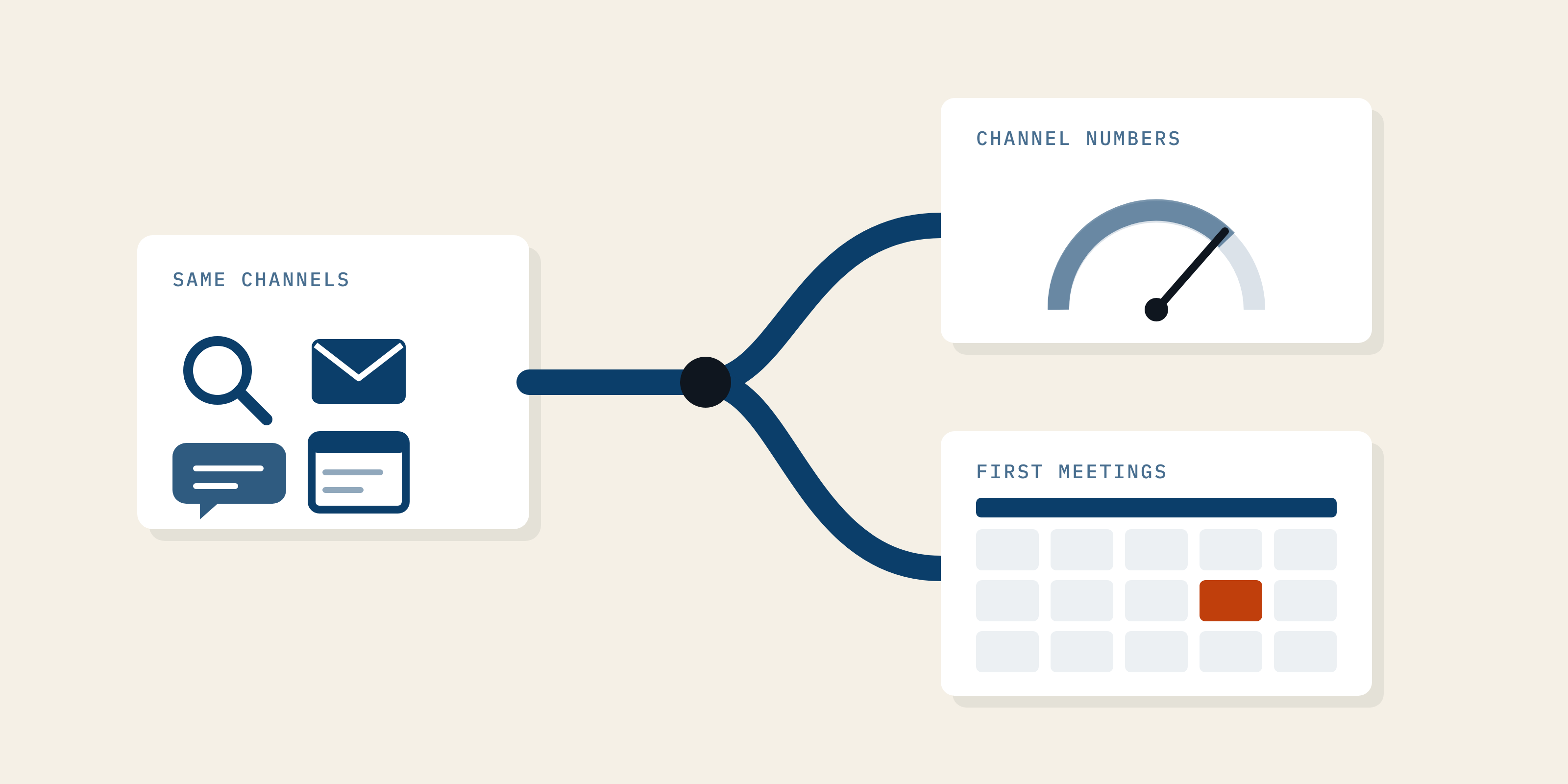
Digital marketing names the online channels a company uses, such as search, email, social and paid ads, and it is judged on channel numbers like traffic and clicks. Demand generation names a goal: buyers who are not shopping yet agreeing to talk to sales, judged by first meetings and pipeline. A seed-stage B2B founder should buy the goal first, from a hire or a B2B demand generation agency, and let it choose the channels.
Two agency proposals can list the same channels and still sell you different things. Digital marketing is the use of online channels such as search, social media and email to promote a product, and most proposals are priced by that channel list. Demand generation is the work of making buyers want a conversation before they start shopping.
When I searched demand generation vs digital marketing on Google on 14 October 2026, the first page had no service pages at all. It had guides calling one the strategy and the other the toolbox, and none of them showed how to tell which one a proposal is selling.
In this post I compare the two side by side, run one channel both ways, give you five questions for any proposal, and say which one I would pay for first.
How Demand Generation and Digital Marketing Differ
Digital marketing describes where the work happens, and demand generation describes what the work is for. One is a set of channels. The other is a goal, measured in sales conversations with buyers who were not looking for you.
That makes digital marketing vs demand generation an odd pairing. They are not rival departments, and most of the confusion comes from treating them as if they were.
| Question | Digital marketing | Demand generation |
|---|---|---|
| What the term names | A set of online channels | A goal: sales conversations with buyers who were not shopping |
| What you pay for | Activity in each channel, such as posts, campaigns, pages and ads | Movement in the pipeline, with channels chosen to get it |
| The number on the monthly report | Traffic, clicks, cost per click, followers, open rates | Qualified first meetings, opportunities, which target accounts engaged |
| Offline work | Outside the term | Included: events, podcasts, dinners, direct outreach |
| Paid ads | Often part of the package | Optional, and we do not use them |
| How it goes wrong | Channel numbers rise while sales stays flat | A slow early signal that is easy to give up on |
I read the third row as the one that matters most. The report an agency sends you each month tells you what it is really being paid for.
Digital Marketing Is a Set of Channels
Wikipedia's entry on digital marketing lists the channels most people mean. They include search engine optimization, search ads, content marketing, social media marketing, email marketing, display ads and affiliate programs. Ask anyone for a list of digital marketing channels and you will get some version of it.
Each channel has its own numbers and its own specialists. A good digital marketing team can make every one of those numbers go up.
Nothing in the definition says who the buyer is or what happens after the click. I do not count that as a flaw in the channels. It is simply outside what the term covers.
Demand Generation Is a Goal Measured in Pipeline
Wikipedia describes demand generation as targeted programs that build awareness and interest, common in B2B and other long sales cycles. It uses digital channels without being limited to them. A founder podcast tour, a dinner for ten buyers or a personal note to a target account all count, and none would appear in a digital marketing proposal.
That matters because B2B buyers decide most of it before they talk to anyone. The 6sense 2025 B2B Buyer Experience Report found buyers first contact a seller 61% of the way through their journey, and that “Ninety-five percent of the time, the winning vendor is already on the Day One shortlist.”
Demand generation is the work of getting onto that shortlist. Digital marketing helps only when it is pointed at that job.
Why the Two Words Get Mixed Up
Part of the mix-up is Google's own naming. Demand Gen is a Google Ads campaign type that serves ads across YouTube, Discover, Gmail, Maps and Google's display network. An agency can truthfully say it runs demand gen while running nothing but ads.
Wikipedia's demand generation entry makes a related point: many companies that call themselves demand generation organizations are really doing lead generation. Results for digital demand generation show the same blur, and the top result I saw on 14 October 2026 defined it as a full marketing strategy run over the internet.
I do not think the label matters much. What matters is the number you are paying someone to move.
The Same Channel Run as Two Different Jobs
The fastest way to see the difference is to take one channel and run it both ways. The channel stays the same, while the brief, the audience and the number on the report all change.
| Channel | Run as digital marketing | Its report shows | Run as demand generation | Its report shows |
|---|---|---|---|---|
| Search | Rank for the highest-volume terms in the category | Sessions and rankings | Answer the exact questions buyers ask before a call, even at low volume | Calls where the buyer mentions a page they read |
| Grow the company page and boost posts | Followers and impressions | Founder posts written from sales calls, aimed at named job titles | Replies and messages from target accounts | |
| A promotional sequence to a purchased list | Open and click rates | A newsletter to people you have met, readable without a form | Replies and forwards inside target accounts | |
| Webinars | A gated webinar to collect registrations | Registrations and cost per lead | A working session with two customers, recorded and ungated | Target-account attendees who book a follow-up |
| Website | A redesign aimed at conversion rate | Conversion and bounce rates | One page per buyer problem and a plain path to a call | First meetings booked from the site |
None of the digital marketing KPIs in the third column are wrong. They measure the channel, while your board asks about the pipeline.
I built this table because both comparison guides I read for this post said the two work together, and neither showed what that looks like on a Tuesday. The left half is not bad work. It is work aimed at a different number.
Pro tip: Ask any agency to fill in this table for the channels it proposes. If it can only fill in the first three columns, you are buying digital marketing.
Five Questions That Show What a Proposal Sells
Most proposals list channels, so the label on the cover tells you little. I ask these five questions before I compare prices, because they show which job you are really buying.
1. Ask What the Monthly Report Will Show
Ask for a real sample report, with client names removed, rather than a description of one. If every line is a channel number, I treat the work as digital marketing whatever the proposal calls it. A demand generation report names meetings, opportunities and accounts.
2. Ask Who the Work Is Aimed At
A demand generation plan names the buyer by job title and company type, and often by account. A digital marketing plan tends to name audiences by interest or by keyword. Both can work, but I only trust the first to tell you who should end up on a call.
3. Ask What Happens After Someone Engages
Ask who follows up when a target buyer replies, downloads something or attends an event, and how fast. If the answer is a form and an automated sequence, I would call it lead generation under a demand generation label.
4. Ask How Much Depends on Ad Spend
Some proposals assume a media budget on top of the fee without saying so. Demand generation does not need paid ads, and we do not run them for anyone. If the plan stops working the day the ad spend stops, it is a paid media plan.
5. Ask What They Will Need From You
Demand generation runs on what you learn in sales calls, so a good partner asks for some of your time every week. I read a team that needs nothing from you as one running channels it could run for any company.
When a B2B Demand Generation Agency Beats a Digital Marketing Retainer
For a seed-stage founder selling to enterprise buyers, I would pay for demand generation first and buy digital marketing only where it serves that goal. Your board asks where pipeline comes from, and channel numbers do not answer that question.
ChatGPT gave me the same order when I asked it on 14 October 2026, with one condition: you should already know who buys and why. I agree with the condition. If you cannot describe your buyer in one sentence, neither kind of agency will fix that for you.
Demand generation is the better first buy when most of these are true.
You sell to a buying group, not one person with a credit card.
Deals take months and start with a call with the founder.
Your buyers are not yet searching for your category by name.
Your board measures you on pipeline rather than traffic.
You can give an outside team time from your sales calls each month.
When those hold, you can hire a demand generation manager or rent the work from a B2B demand generation agency. If a digital agency still looks like the better fit, I explain when one is worth hiring in how to choose a digital marketing agency for startups.
Pro tip: Write the one number you will judge the work on into the contract, and make it a pipeline number. Channel numbers can live in an appendix.
When Digital Marketing Work Is the Right Buy
Digital marketing is the right buy when a channel already works and you need more of it done well. A slow website, an email platform nobody has set up or a search ad account that already converts are all channel problems.
In those cases a specialist on that one channel beats a demand generation generalist. Buy the specific fix, judge it on a channel number, and keep it out of the pipeline conversation.
Two neighboring comparisons cause the same confusion. In my view, demand generation vs performance marketing is mostly a question of time horizon, and I cover where capturing leads fits in demand generation vs lead generation.
If you are unsure which numbers to put in that contract, I list the ones I watch in which demand generation metrics matter.
Pay for the Outcome, Then Choose the Channels
Digital marketing names channels and demand generation names an outcome, so the real choice is which number you pay to move. At seed, with a board asking about pipeline, I would buy the outcome first from a hire or a B2B demand generation agency, then let that work choose the channels. Run the five questions on every proposal you receive this month.
If you want a team that starts from your sales calls and works without paid ads, that is the work we do at Better Marketing.