

Quick Answer
A B2B growth agency should report the chain from spend to named buyer conversations to pipeline, not engagement numbers on their own. Ask for one page each month covering spend and hours, conversations with named buyers, pipeline and revenue from that work, one leading signal per channel, tests with decisions, and what the agency needs from you. Agree how each line is counted before the first report arrives.
A founder described a familiar story in a public thread this year. They paid an agency $12,000 a month and got generic content plus engagement reports that never connected to revenue.
Another founder told a similar story on LinkedIn. The money went out, pipeline stayed at zero, and the content didn't sound like them, so they fired the agency.
I don't think either agency was necessarily lazy. The reports were built around what the agency could count easily, not around what the founder needed to decide.
In this post I cover what a B2B growth agency should report instead and why engagement reports hide the answer. I also share a one-page template for any agency, how to count influenced pipeline and when engagement still belongs.
What a B2B Growth Agency Should Report Instead of Engagement Numbers
A B2B growth agency should report what its work produced in buyer conversations, pipeline and revenue, with engagement only as supporting evidence. Every report should answer one question. What did this month's spend move closer to a sale?
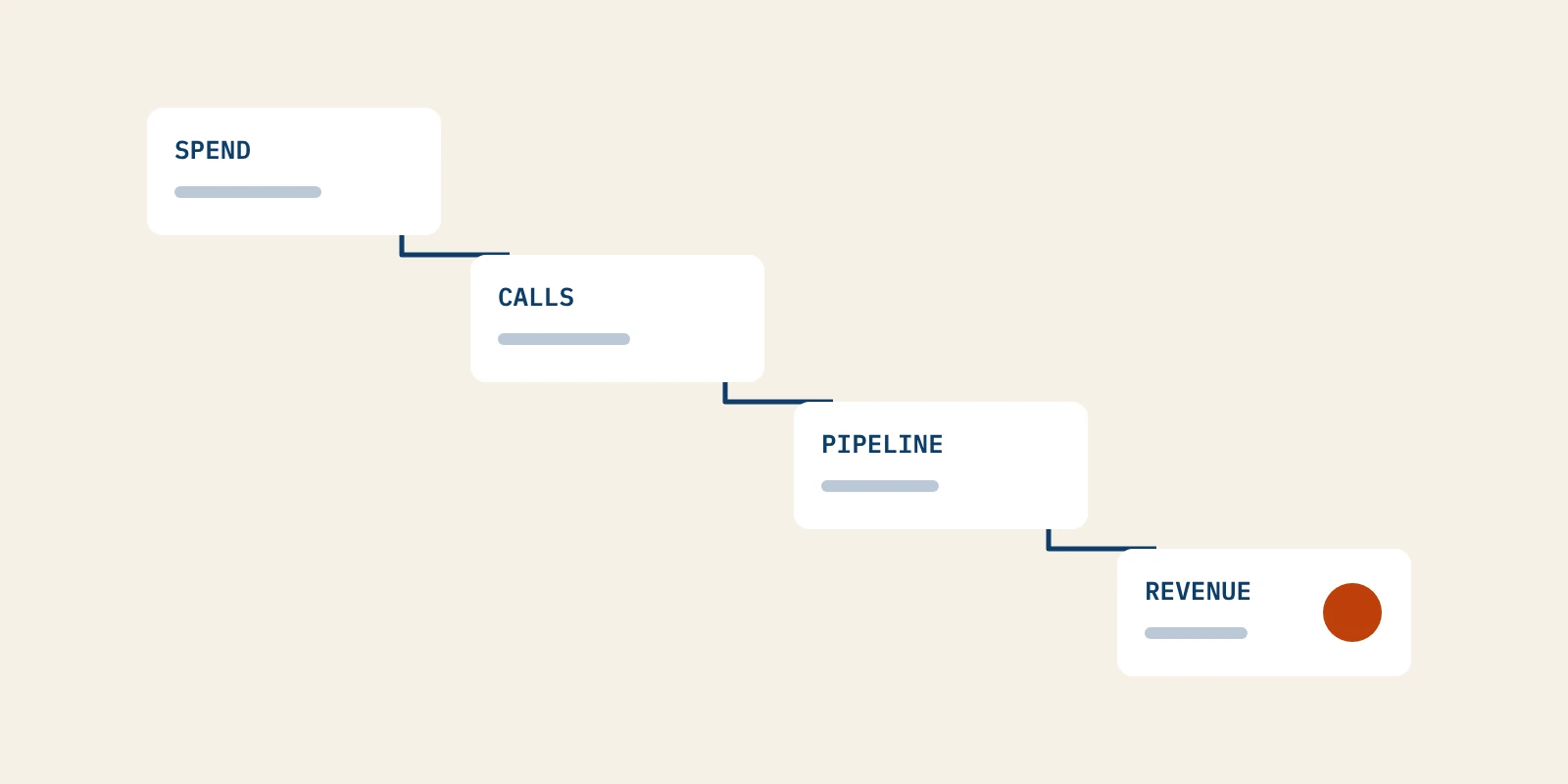
That means each agency report needs a chain you can follow. Spend leads to activity, activity leads to conversations with named buyers, and conversations lead to opportunities you can value.
Engagement can still appear, but as a leading signal under a specific channel. A rise in comments from target buyers is useful context, while a rise in impressions from anyone is not.
Pro tip: Ask the agency to name five companies its work put in front of you this month. If it can't name any, the report is measuring attention rather than buyers.
Why Engagement Reports Hide If a B2B Growth Agency Is Working
Engagement reports hide if an agency is working because they measure attention, which is cheap to grow and loosely tied to buying. A report full of likes and impressions can look healthy while pipeline stays flat.
The lean startup literature has a name for these numbers. Wikipedia's article on lean startup contrasts actionable metrics with vanity metrics, which give the rosiest picture possible without reflecting what drives the business.
The gap shows up in surveys of marketers too. Marketing Week's 2025 Language of Effectiveness survey found under a third of B2B brands, 29.8 percent, always measure the return on their marketing spend.
The same survey asked marketers which metrics their CEO, CFO and board use to judge campaigns. ROI topped the list, named by 53.4 percent, so the people paying likely care most about the number engagement reports leave out.
Research by Perion and Advertiser Perceptions points the same way. Only 22 percent of the 167 marketers surveyed strongly agreed they have the measurement insights needed to justify value to their CFO.
A One-Page Report Template to Ask Any B2B Growth Agency to Fill In
This one-page template gives a founder the same six lines from any B2B growth agency, every month. It's my own format, built so a busy founder can read it in five minutes.
| Line | What It Shows | Example Entry |
|---|---|---|
| 1. Spend and hours | What the month cost, in money and team time | Retainer, ad spend, 6 founder hours |
| 2. Named buyer conversations | Calls or replies with people who fit the buyer | 9 conversations, companies listed |
| 3. Pipeline and revenue | Opportunities created and deals closed from earlier work | 3 opportunities, 1 closed from March |
| 4. One leading signal per channel | The early number that predicts conversations | Target-buyer comments, demo requests |
| 5. Tests and decisions | What was tried, the result, keep or stop | Two email angles, one stopped |
| 6. What we need from you | Founder input required next month | Two interviews, one approval |
The example entries are illustrations, not results from a client. Replace them with your own numbers in the first month.
1. Spend and Hours
Ask for total cost, including ad spend and tools billed through the agency. Add your own hours, because in my experience founder time is the hidden cost of an agency relationship.
2. Named Buyer Conversations
Ask for a count and a list of companies, not anonymous totals. A named list lets you check the conversations were with real buyers who fit your market.
3. Pipeline and Revenue
Ask for opportunities created this month and revenue closed from opportunities created earlier. B2B deals often take months, so this line should look back as well as forward.
4. One Leading Signal per Channel
Pick one early number per channel that tends to come before conversations. Agree on it upfront, so the agency can't swap in whichever number grew this month.
5. Tests and Decisions
Ask what was tested, what happened and what the agency decided. In my experience, a report with no stopped tests usually means nothing is really being tested.
6. What We Need From You
Ask the agency to list what it needs from you next month. This line protects both sides, because missing founder input is a common reason agency work stalls, in my experience.
How to Count Pipeline an Agency Influenced Without Arguing About Attribution
Count influenced pipeline by agreeing the rules before the first agency report, not after a disappointing one. Write down what counts as sourced, what counts as influenced, and where the data comes from.
The simplest check I know is asking buyers directly. A "how did you hear about us?" question on the demo form or first call catches channels that software tracking misses.
This guide to self-reported attribution shows how a seed-stage team runs that question, codes the answers and turns them into a board slide.
Expect some overlap. A buyer might read the founder's posts, get an email and then search for you, so I'd report agency-sourced and agency-influenced pipeline as two separate numbers.
Pro tip: Put the attribution rules in the contract or the kickoff notes. When the definitions are written down early, the monthly report becomes a check rather than a debate.
Questions to Ask a B2B Growth Marketing Agency Before You Sign
Ask a B2B growth marketing agency how it reports before you sign, because the report shapes what the agency works toward. These are the questions I'd ask:
- Can you show a past monthly report with client details removed?
- Which numbers do you treat as results, and which as leading signals?
- How do you count pipeline you influenced but didn't source?
- What will you need from me each month, in hours?
- What would make you recommend we stop working together?
The last question tells you a lot. An agency with a clear answer usually knows what it's trying to move, in my experience.
The same questions apply to a B2B SaaS growth agency or a general one. A B2B SaaS growth marketing agency may know subscription metrics better, but it still has to show how its work reaches named buyers.
Ask to speak to one current client as well. A reference who can describe the monthly report in their own words tells you more than a polished sample.
Cost belongs in the same conversation. This breakdown of what a demand generation agency really costs covers the outside costs, minimum term and founder hours beyond the retainer.
Some founders mainly need posting that leads to buyer conversations. For them, a B2B technology marketing agency that drafts in your voice may fit better than broad B2B growth marketing services.
When Engagement Numbers Still Belong in an Agency Report
Engagement numbers still belong in an agency report when they're tied to a specific channel and a specific buyer. Comments from target accounts on founder posts, for example, often come before the first conversation.
They also matter early, before pipeline exists. In the first two or three months, a B2B growth agency may only be able to show leading signals, and that's reasonable if they were agreed upfront.
The problem is engagement presented as the result. If month six still reports only reach and likes, the work hasn't connected to buying, whatever the charts say.
For a plan that sets quarterly goals with a monthly review, this one-page demand generation plan template shows how to agree them before the work starts.
Send the B2B Growth Agency Report Template Before the Next Monthly Report
A B2B growth agency should report the chain from spend to named buyer conversations to pipeline. Send your agency the six-line template this week, agree how each line is counted, and judge the next report against it.
Related guides in this series:
- Do You Need B2B Marketing Experts Yet, or One Person to Do the Work?
- How to Market a Tech Company When Buyers Do Not Know You Exist
- How to Market B2B SaaS When You Have Only Ever Written Code Before
- When Does a Marketing Agency for SaaS Companies Start to Pay Off?
- Marketing for SaaS Startups When the Founder Would Rather Keep Coding
- What SaaS Product Marketing Strategy Looks Like When Nobody Knows You
- Does Social Media Marketing for Tech Companies Work With No Audience?
If founder posting is the channel you want reported this way, Better Marketing drafts it in your voice and reports which target buyers reply and message.